Before the Ball Leaves
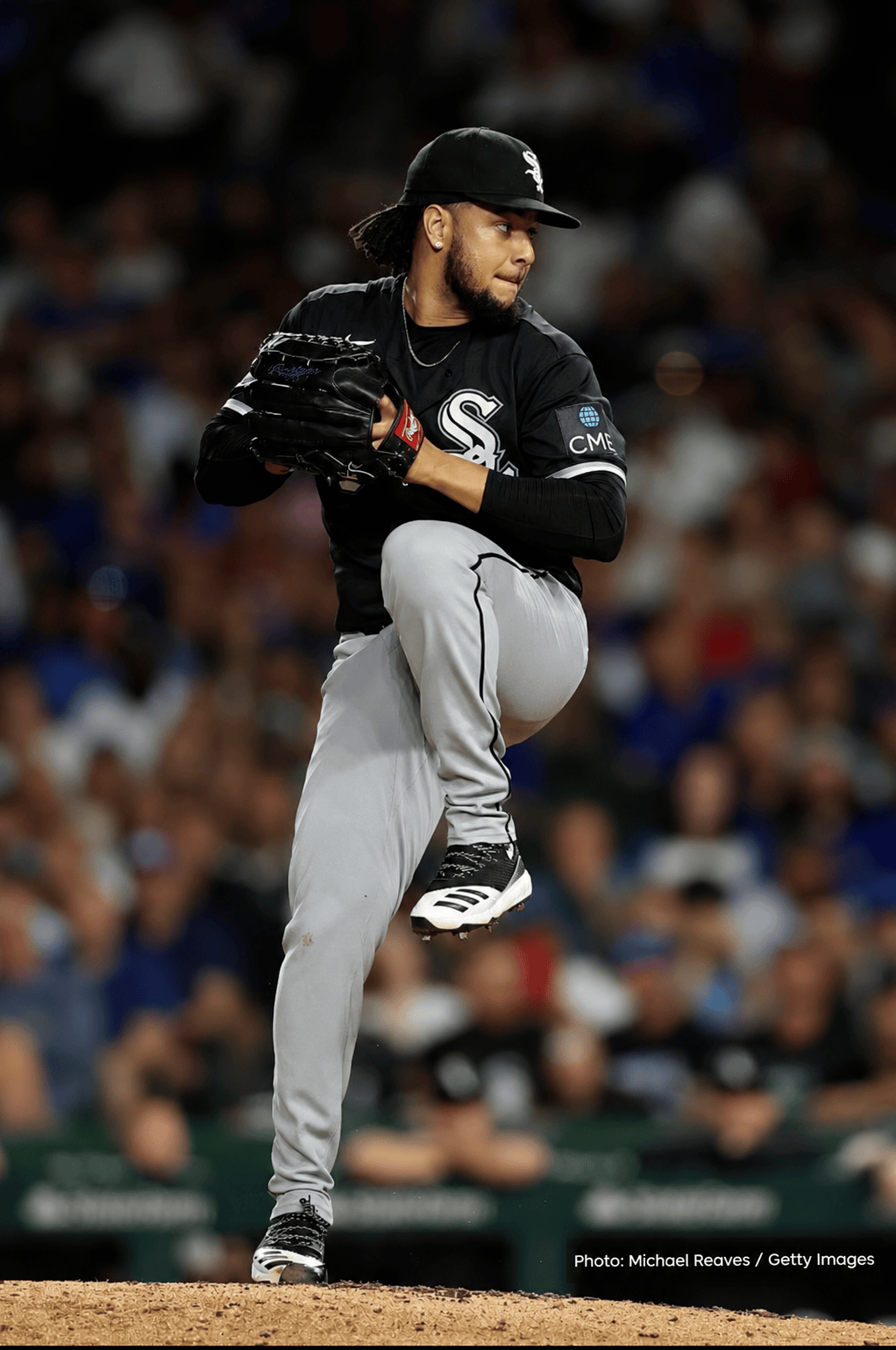
I don’t follow baseball closely enough to know what the photograph is supposed to tell me about the season.
I’m looking at his knee.
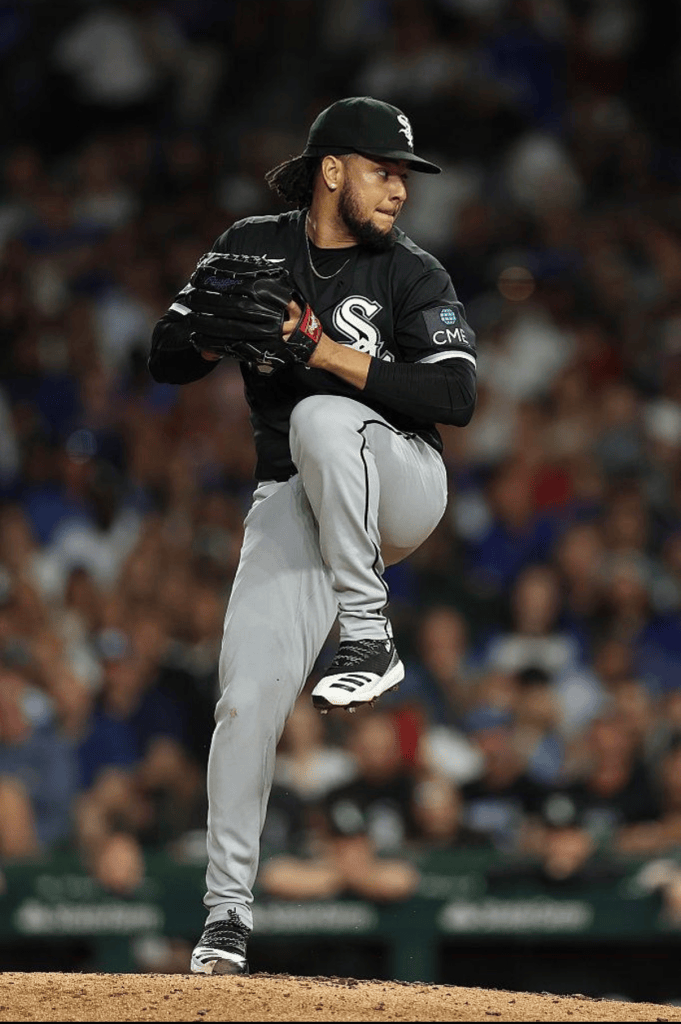
The pitcher has raised it almost to his chest. His hands are together. One foot holds the whole arrangement above the mound.
I recognize something about that position before I know what to call it.
I have stood on one leg. I have lifted a knee. I know the little corrections in the ankle, the work that begins elsewhere when you move an arm. Looking at him, I can almost feel my own standing foot.
He looks still.
I don’t expect him to stay there.
“Is he coiling?”
That is the first description that comes to me. A spring. Then a skater drawing in her arms. Then a child spinning, arms out, arms in. Something I have done and watched and heard explained.
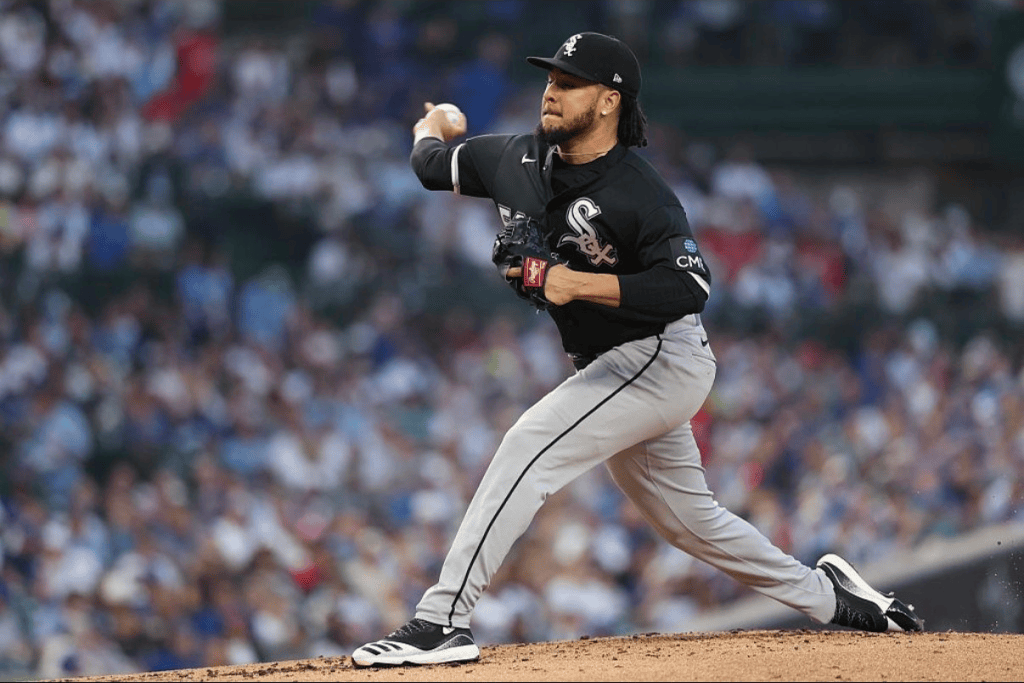
In another photograph, the pitcher has stepped forward. His legs span the mound. The ball remains behind his shoulder while much of him has already gone toward the batter.
For a moment, it looks as though he has been holding the ball in place and moving himself away from it.
I know the ball hasn’t stayed in one place. But that is what the arrangement lets me feel: the body going first, the hand coming through.
Then I look at a batter.
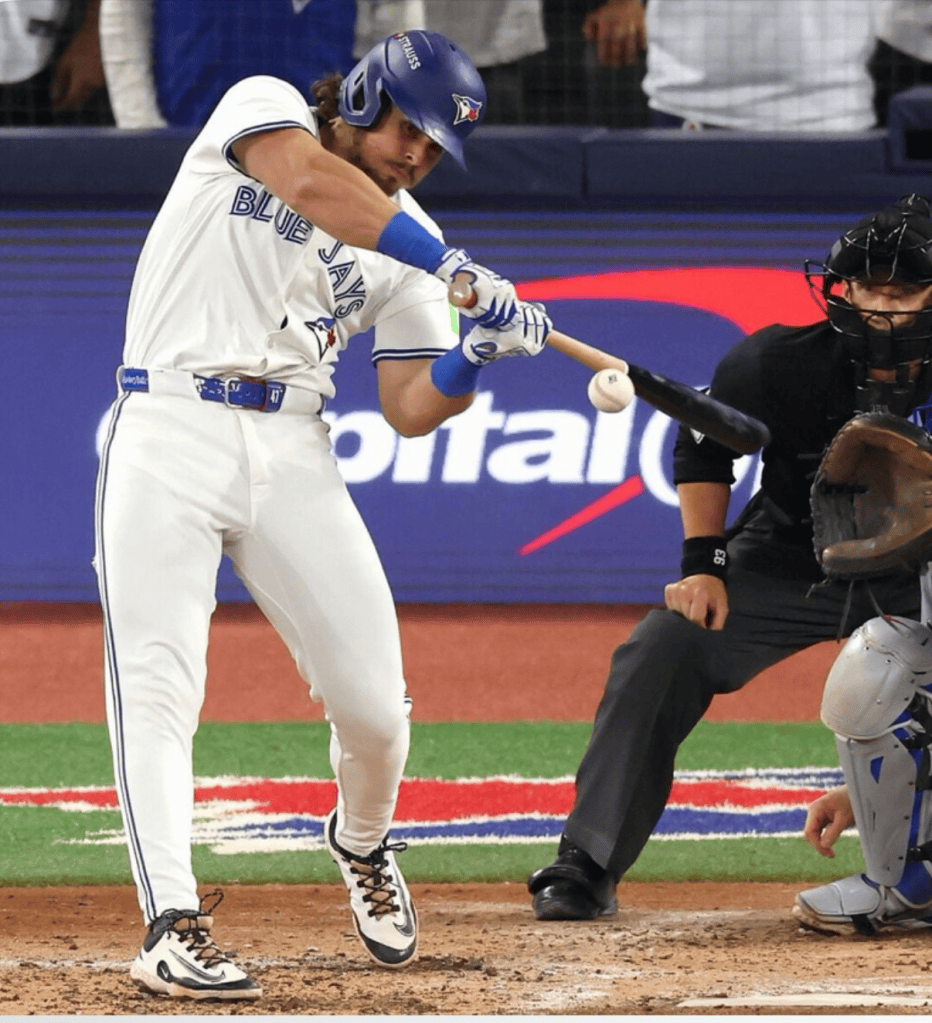
The ball is close. His torso has turned. One foot is planted; the other has rolled onto its toe.
That small contact catches my attention.
A rudder, I think.
It gives me somewhere to begin. I can imagine turning on the ball of my own foot, letting a heel come around as the rest of me turns.
There is a great deal of body in this game.
Its intervals make that body available to me. Gather. Deliver. Wait. The photographs separate movements that would otherwise pass too quickly for me to inspect.
And yet a photograph doesn’t contain the movement I give it.
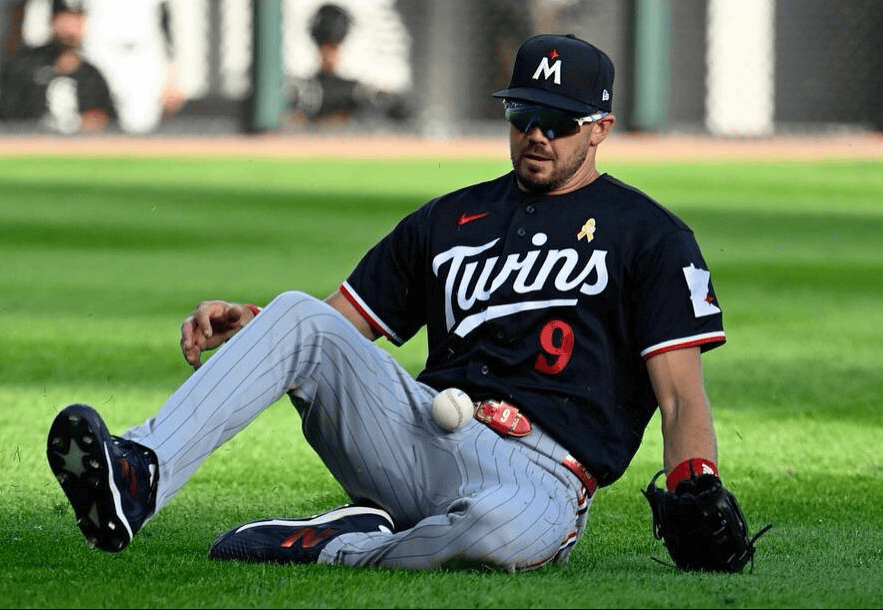
A player is down on the grass. One knee is raised. His glove touches the ground beside him. A baseball hangs just above his lap.
“Is he juggling?”
Then I notice the tufts of grass in the air around his shoe.
He looks as though he has slid to reach the ball. I had imagined him sitting.
The pitcher’s raised knee had me imagining what would happen next. Here, the flying grass makes me reconsider what happened just before.
I look again.
The ball is just above his lap.
WE&P by: EZorrillaMc&Co.
Sources and further reading
The photographs prompted this essay’s observations about balance, movement, and what a still image lets us infer.
- Michael Reaves / Getty Images: Luis Castillo pitching at Wrigley Field, August 17, 2026. Raised-knee photograph
· Stride photograph
.
- Matt Marton / Imagn Images, via Reuters Connect: Trevor Larnach attempting to field a double at Rate Field, September 6, 2026. Original photograph and caption
.
For reading alongside the piece:
- John Berger, Understanding a Photograph. Essays on photographs, the moments they preserve, and the context outside the frame.
- James J. Gibson, The Ecological Approach to Visual Perception. An exploration of perception through our relationship with the environment and our possibilities for action.
- Maurice Merleau-Ponty, Phenomenology of Perception. A philosophical account of how bodily experience shapes perception.


You must be logged in to post a comment.