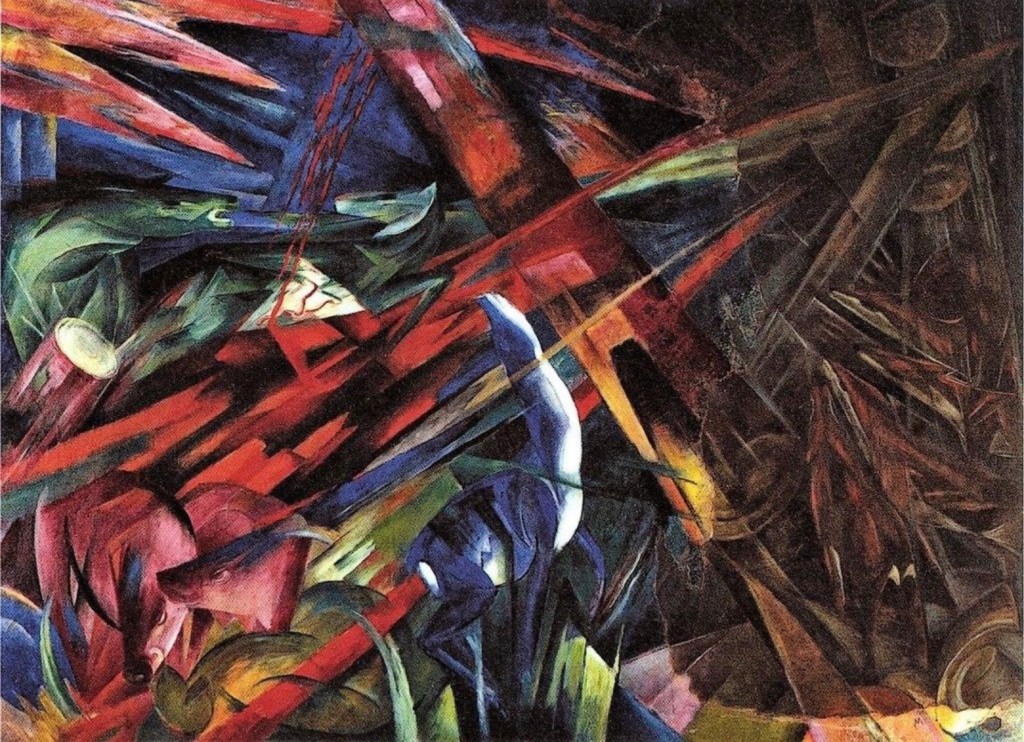
The painting was already two years old when Franz Marc saw the war in it.
In 1915, serving at the front, he received a postcard reproduction of Fate of the Animals. He had painted it in 1913.
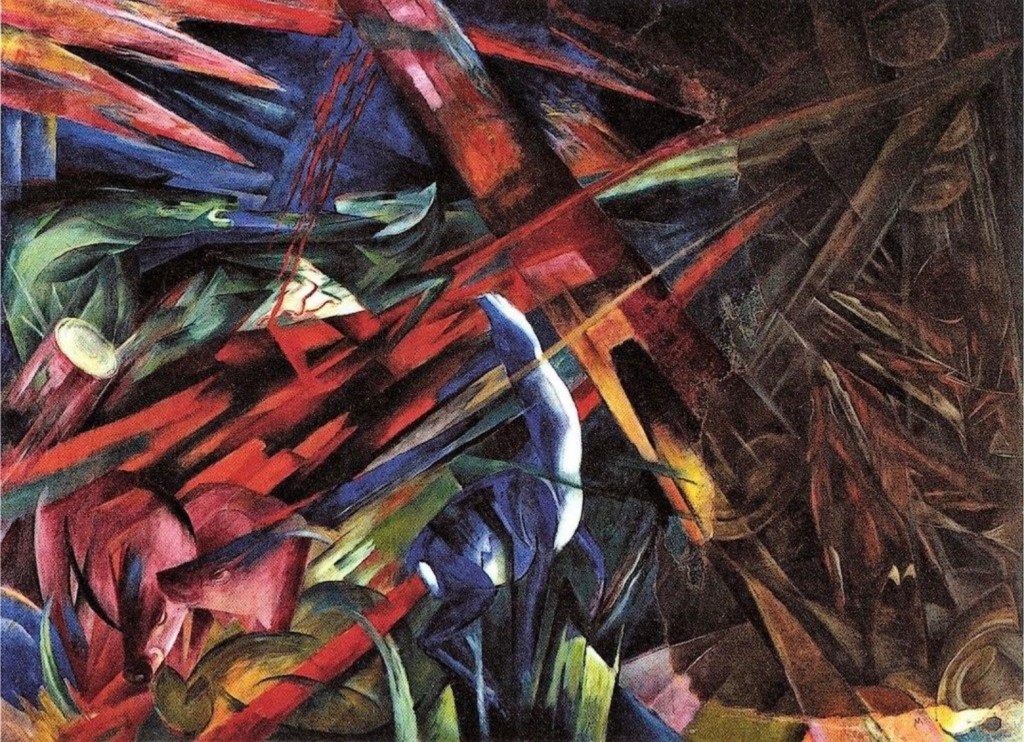
A blue deer throws back its head beneath sharp diagonals that cut through the forest. Trees and animals seem caught in the same breaking movement. Writing to his wife, Marc described the picture as a premonition of the war. He could scarcely believe he had painted it.
What had he seen in 1913? And how much of what he recognized in 1915 had the war taught him to see?
A year before Marc painted those animals, Ludwig Meidner was painting landscapes in upheaval.
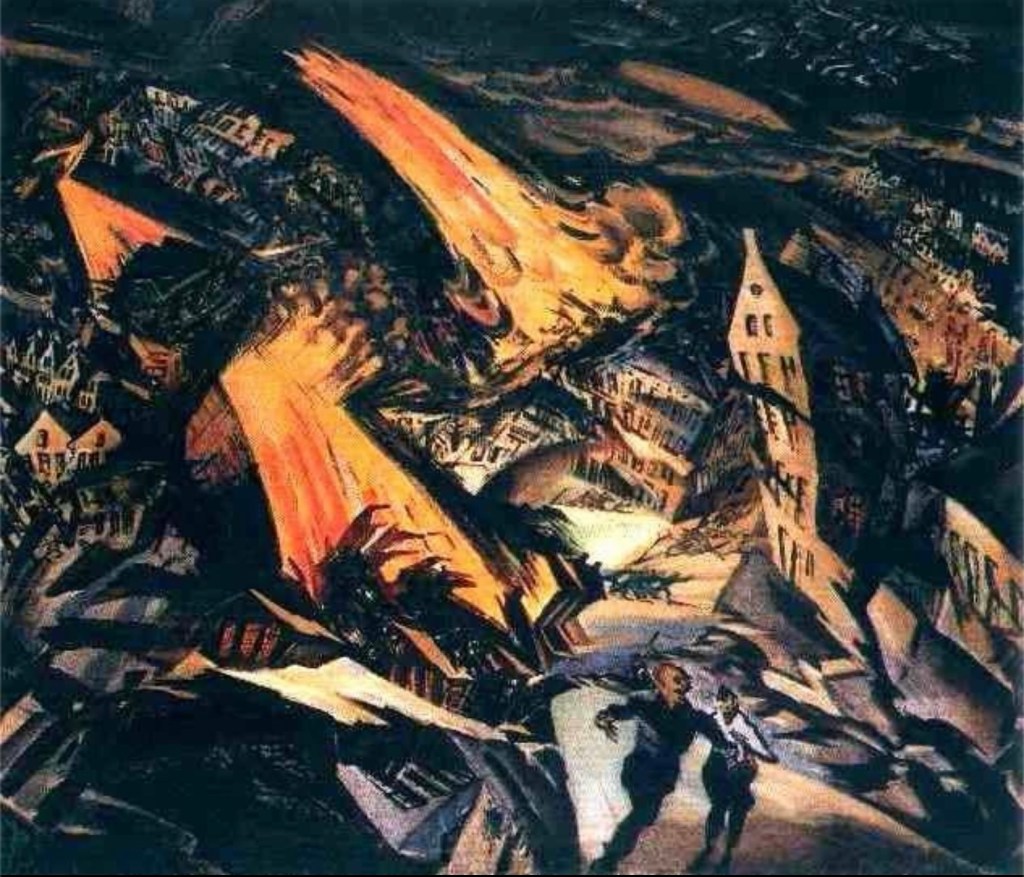
The ground rises beneath the figures. A volcano smokes in the distance, and a comet crosses the sky. Put these paintings beside each other and it becomes tempting to say the painters knew something was coming. But we arrive knowing what came next.
The paintings were there before the war. The question is what was already happening in them.
By 1915, soldiers and weapons were entering the paintings. The same sharp edges that had broken up a landscape could now describe the machinery of battle.
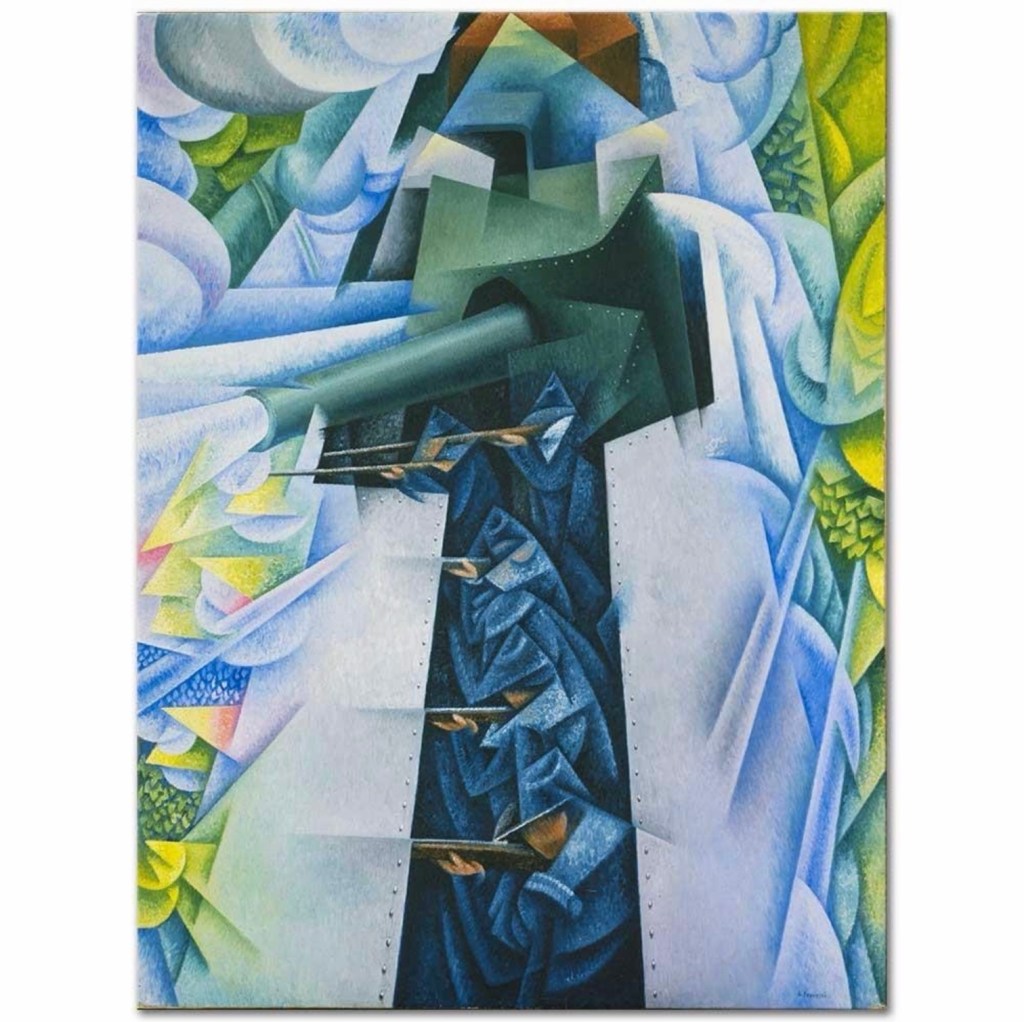
The soldiers lean forward together. Their rifles point in the same direction, their bodies repeat the angles of the armor around them. Smoke opens into broad, pale shapes above the train.
Severini had already been painting speed and machinery before the war. Here, that language finds an armored train. The men fit into its rhythm. Looking at them, I find it difficult to decide where the machine ends.
In another painting from the same year, a soldier stands in his studio.
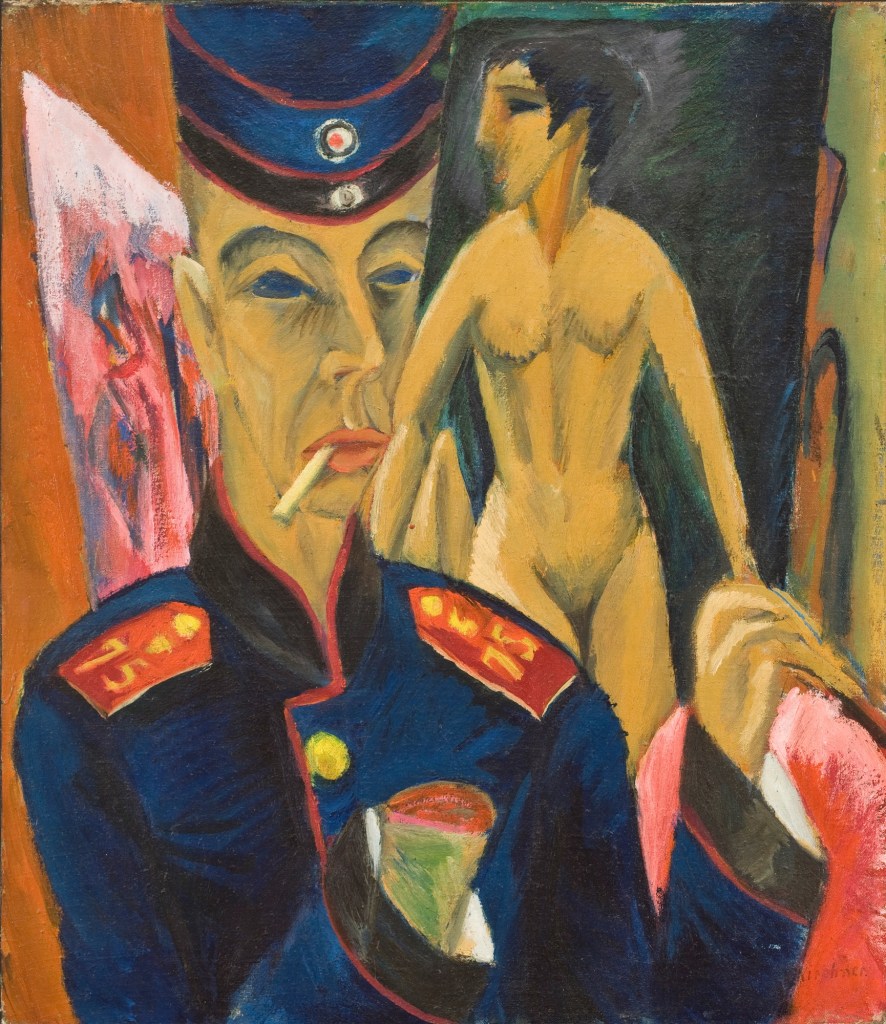
Kirchner wears his uniform and holds a cigarette between his lips. Behind him is a nude figure. Near the bottom of the canvas, he raises the stump of his right arm.
He still had his hand. He painted himself without it.
The studio remains around him, with its canvases and its figure waiting to be painted. He has put the injury between himself and the work. What would happen to the painter if he returned from being a soldier?
Matisse gives us another way to approach the change. We can return to a window he painted before the war and look at what occupies the opening nine years later.
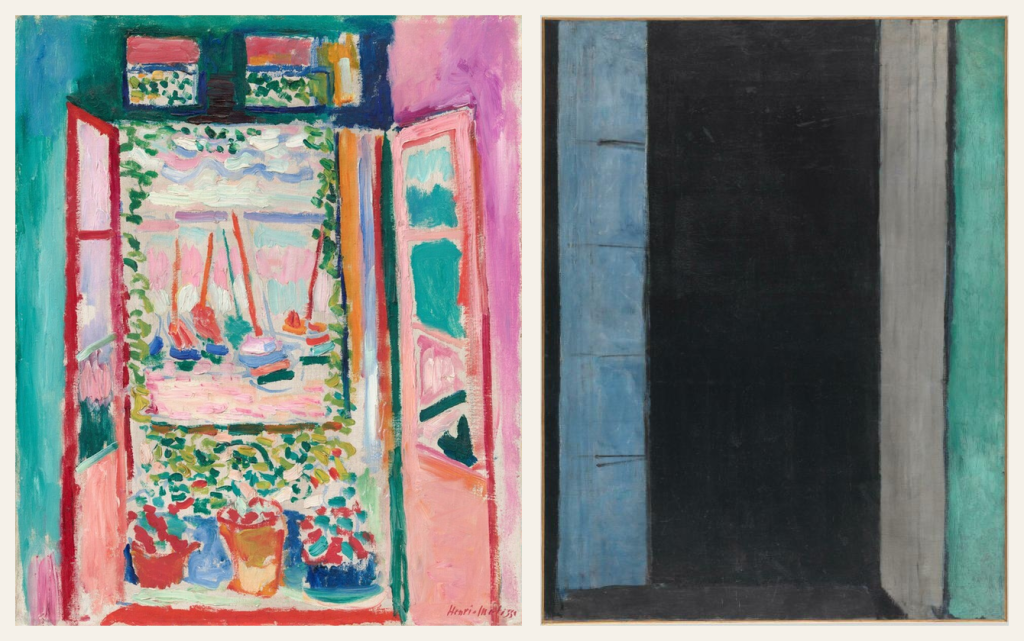
On the left, pink water carries the boats. Color moves between the harbor and the room, finding reflections in the open panes.
On the right, a tall field of black occupies the opening. Narrow bands of color remain beside it. Matisse left this painting unfinished when he returned to Paris in October 1914.
The window still holds the picture together. We recognize the invitation to look through it. This time, our eye reaches the black and stays there.
We know what happened between these two windows. That knowledge comes with us when we look.
WE&P by: EZorrillaMc&Co.
Six paintings in the order discussed.
- Ludwig Meidner, Apocalyptic Vision (1912). The ground seems to rise beneath the figures.
- Franz Marc, Fate of the Animals (1913). Follow the diagonals cutting through the forest around the blue deer.
- Gino Severini, Armored Train in Action (1915). The soldiers’ repeated poses echo the geometry of the train.
- Ernst Ludwig Kirchner, Self-Portrait as a Soldier (1915). Look at the hand he imagines losing, then at the studio behind him.
- Henri Matisse, Open Window, Collioure (1905). Pink water and sailboats fill the opening.
- Henri Matisse, French Window at Collioure (1914). A tall field of black occupies the opening.
Sources and further reading.
- Spencer Museum of Art, “Reitschule (Riding School).” The label text includes Marc’s 1915 response to Fate of the Animals, supporting the opening passage about recognizing the war in his earlier painting. Read the museum commentary
.
- Yungjin Shin, “Franz Marc’s Letters and Sketches from the Front Lines of World War I.” Guggenheim, July 2, 2015. Background on Marc’s wartime correspondence and sketchbook. Read the article
.
- The Metropolitan Museum of Art, World War I and the Visual Arts (2017). Historical context for the different ways artists responded to the war and adapted their visual language to it. Read the publication
.


You must be logged in to post a comment.