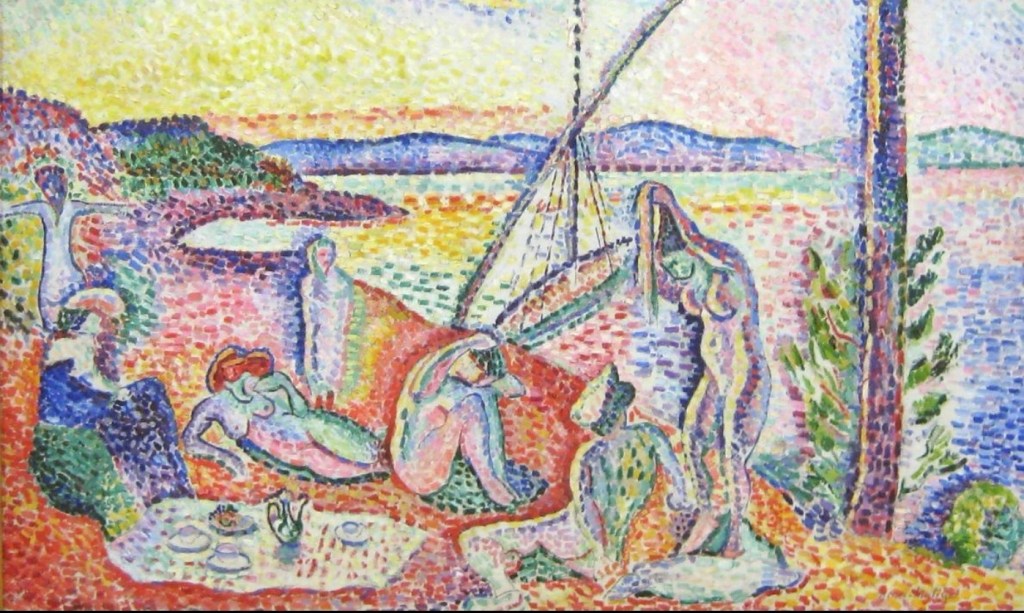
In 1904, Henri Matisse painted a beach out of small, separate strokes. Look closely at Luxe, calme et volupté and you can see where the brush touched the canvas. Step back and there are bathers, a sailboat, and a shore. The marks stay apart. The scene comes together.
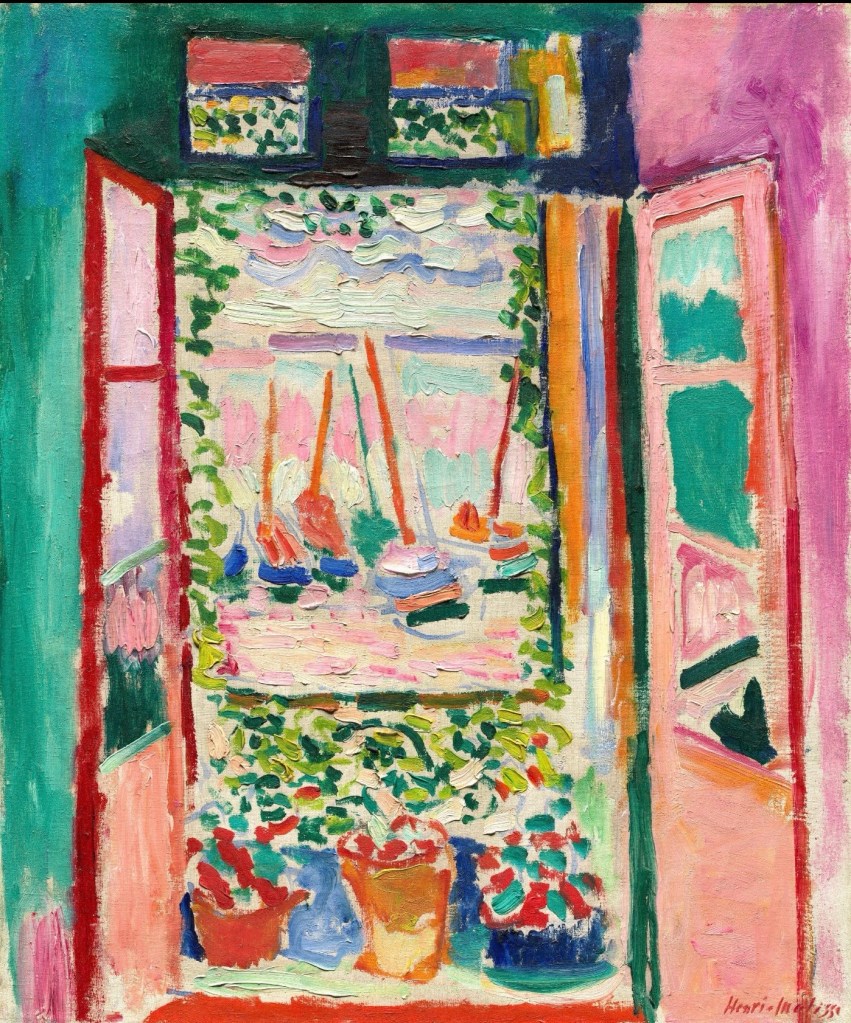
A year later, in Open Window, Collioure, the little strokes are still there in the harbor. Around them, broad patches of color shape the walls and windowpanes. The pink beside the window finds an echo in the water. Matisse showed the painting at the 1905 Salon d’Automne, where a critic called him and some of his fellow painters fauves, or wild beasts
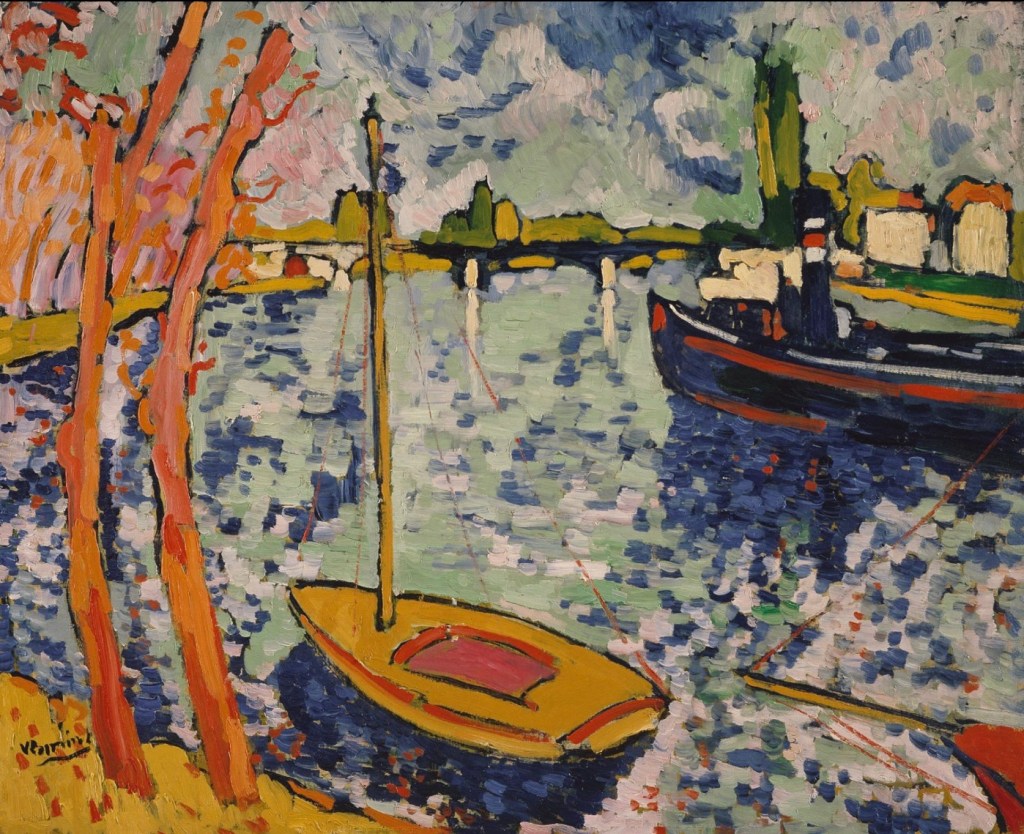
By 1906, you could see how differently those painters used color. In Maurice de Vlaminck’s Boats on the Seine at Chatou, short strokes of red and yellow make the foreground restless.
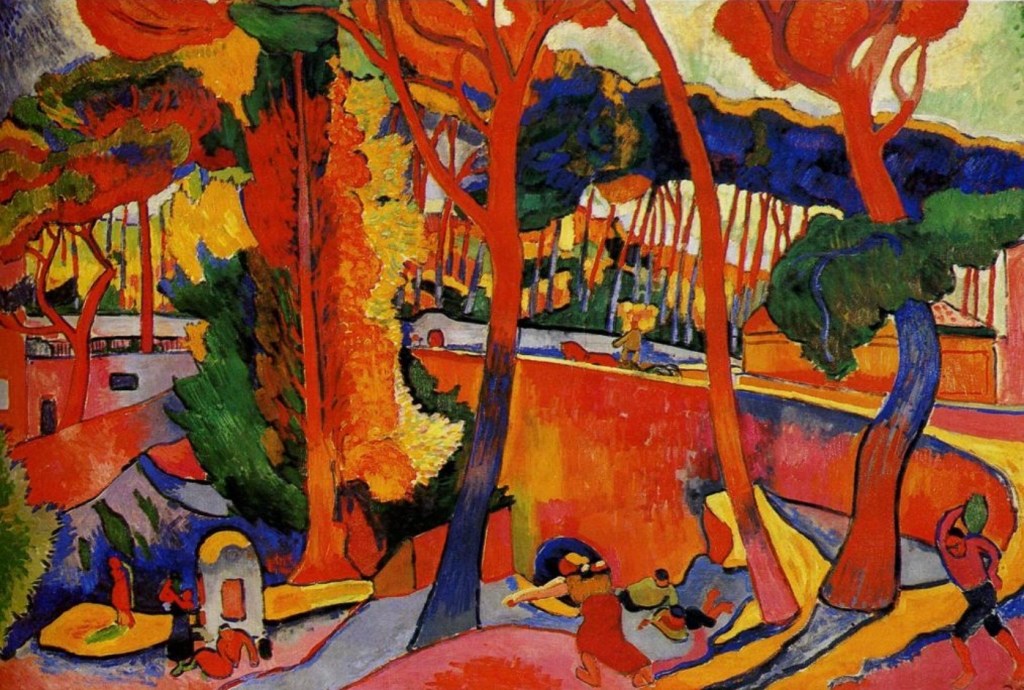
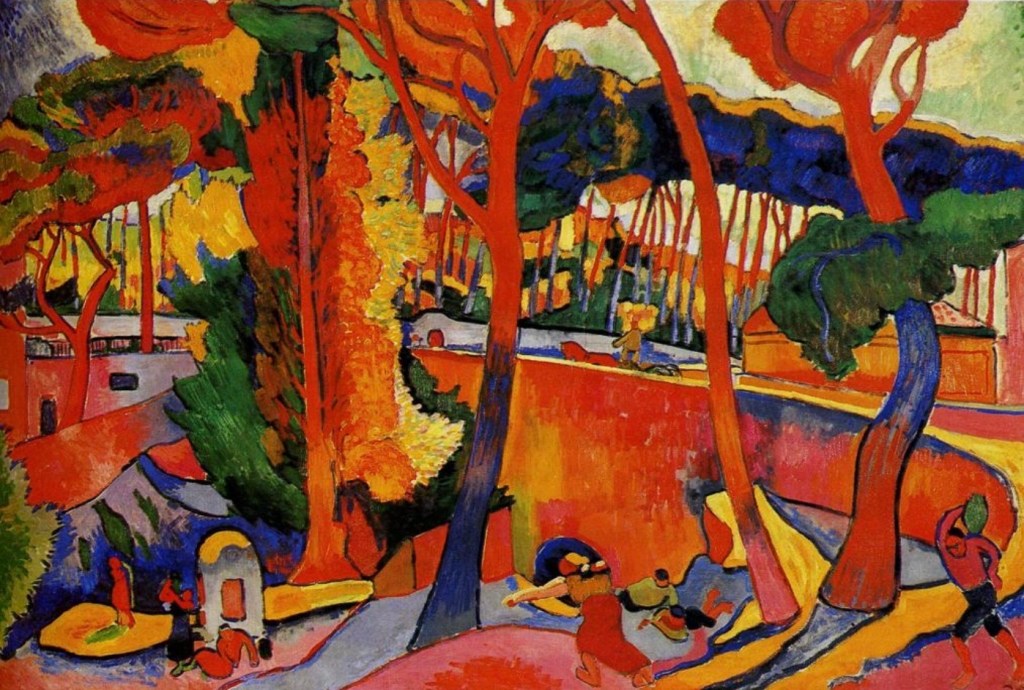
In André Derain’s The Turning Road, L’Estaque, red and orange trees lead your eye around a bend.
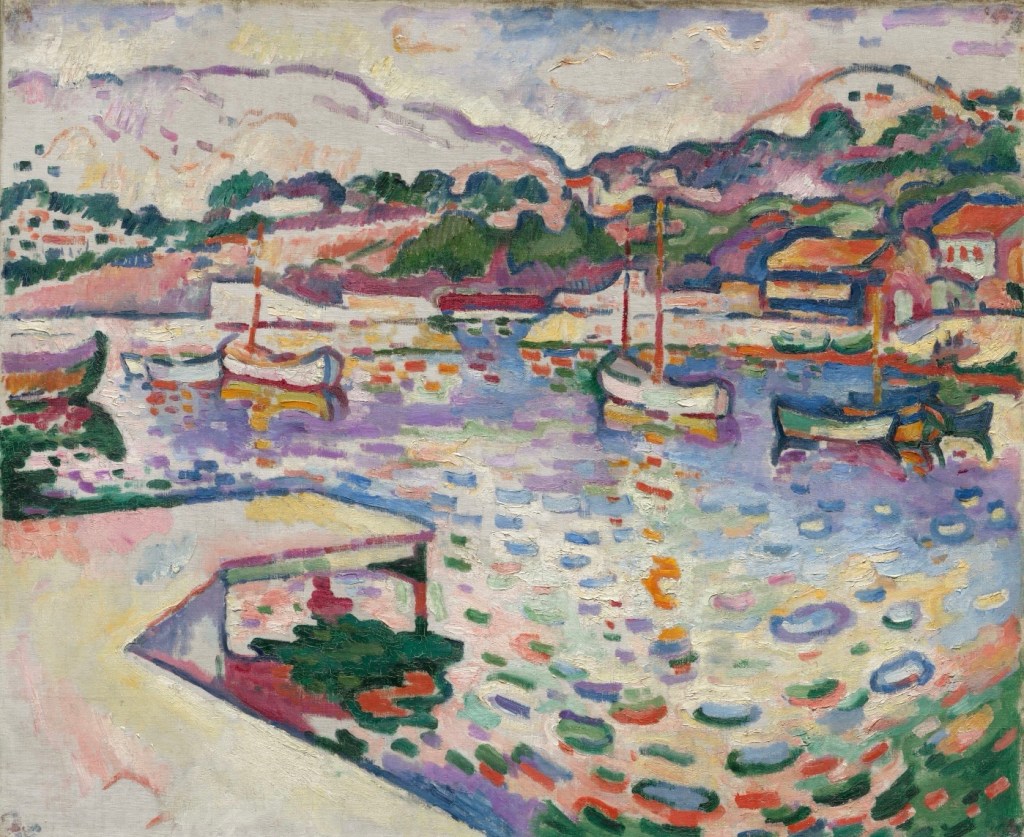
In Georges Braque’s Seascape, L’Estaque, bright strokes leave stretches of bare canvas between them. There’s still enough there to see the village.
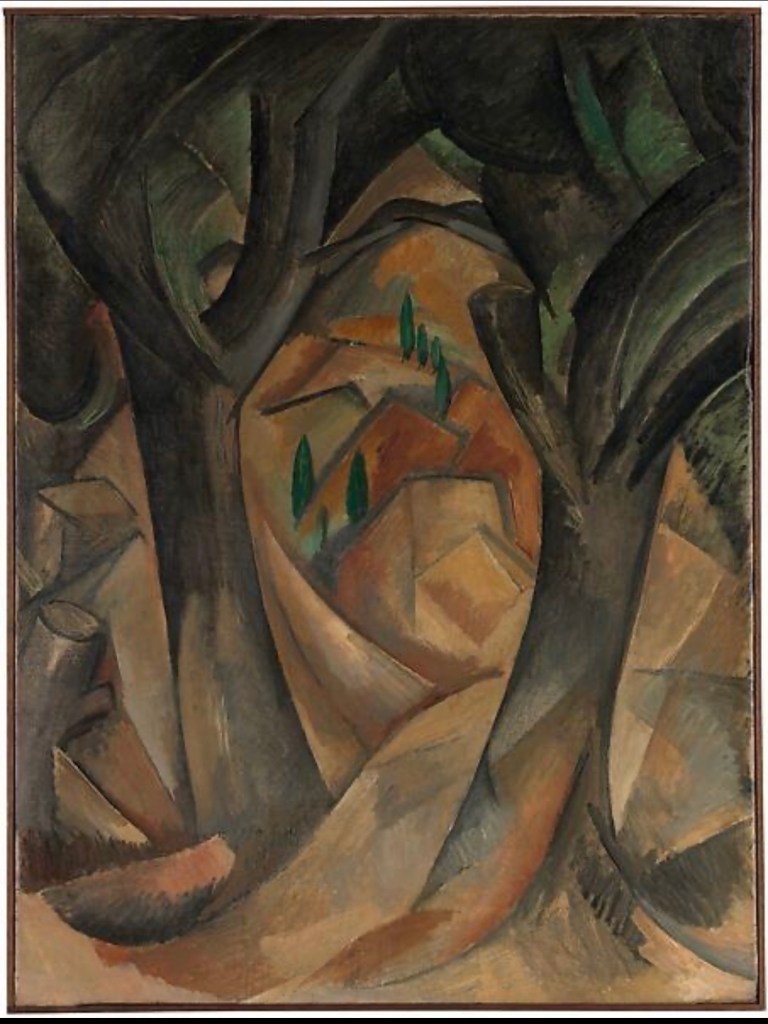
Braque went back to L’Estaque in 1908. Much of the bright color was gone. In Trees at L’Estaque, the trunk at the far left has become a cylinder, and the forms behind it seem to press forward. He was still rearranging what he saw. This time, the shapes did much of the work the color had done.
That same year, Matisse painted The Red Room. At Collioure, pink had linked the wall and the water across a distance you could still feel. Here, the same blue pattern runs across the red table and up the red wall, making the two surfaces read as one. The fruit tells you there’s a table. You can still find the corner, but the painting needs it less than the room does.
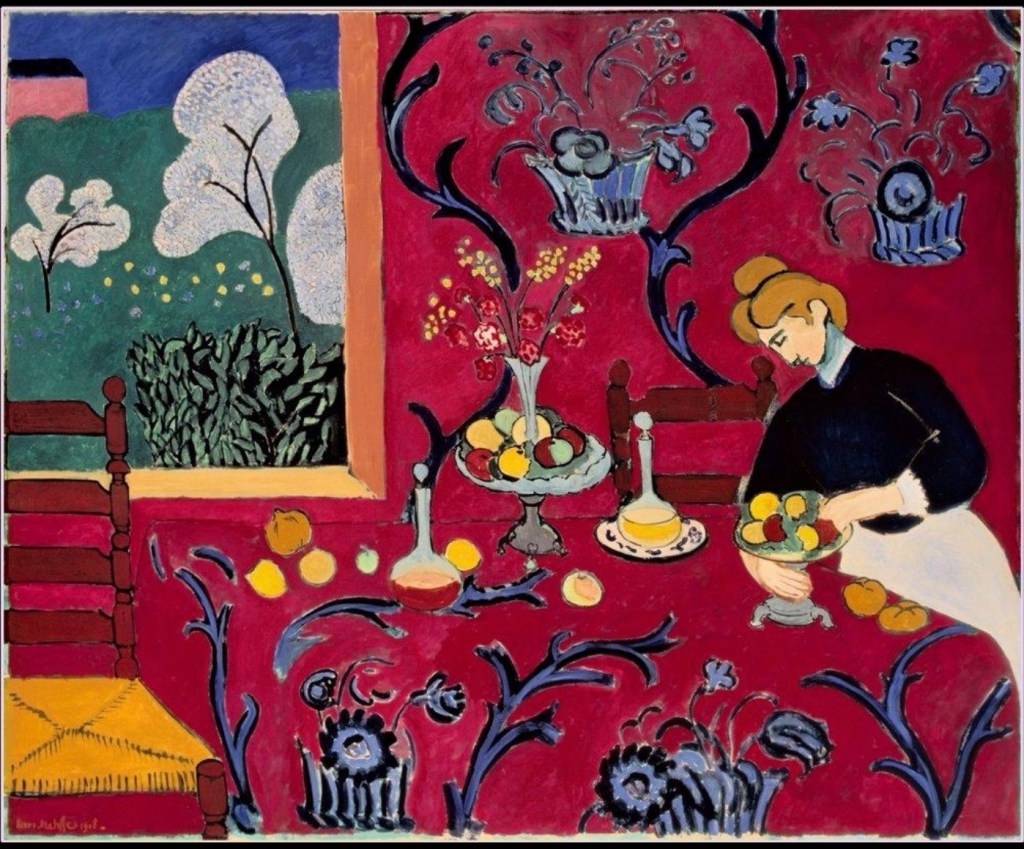
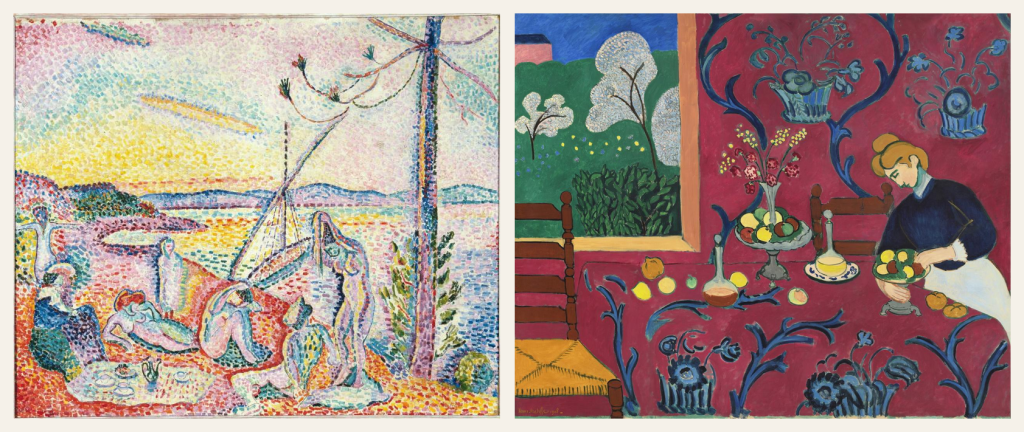
Henri Matisse, Luxe, calme et volupté (1904), left, and The Red Room (Harmony in Red) (1908)
In the pair above, the painting on the left asks your eye to join what Matisse leaves apart. The one on the right asks it to separate what he joins.
WE&P by: EZorrillaMc&Co.
Sources
Paintings, in the order they appear
- Henri Matisse, Luxe, calme et volupté (1904). Centre Pompidou
- Henri Matisse, Open Window, Collioure (1905). National Gallery of Art
- Maurice de Vlaminck, Boats on the Seine at Chatou (1906). The Metropolitan Museum of Art
- André Derain, The Turning Road, L’Estaque (1906). Museum of Fine Arts, Houston
- Georges Braque, Seascape, L’Estaque (1906). Museo Nacional Thyssen-Bornemisza
- Georges Braque, Trees at L’Estaque (1908). The Metropolitan Museum of Art
- Henri Matisse, The Red Room (Harmony in Red) (1908). State Hermitage Museum collection. Pushkin State Museum of Fine Arts entry
Background reading
- Sabine Rewald, “Fauvism” (2004). Covers the 1905 Salon d’Automne and the different directions Braque and Matisse took after Fauvism. The Metropolitan Museum of Art
- Henri Matisse: A Retrospective (1992). Discusses how the pattern in The Red Room carries across the table and wall. The Museum of Modern Art, exhibition publication (PDF)


You must be logged in to post a comment.