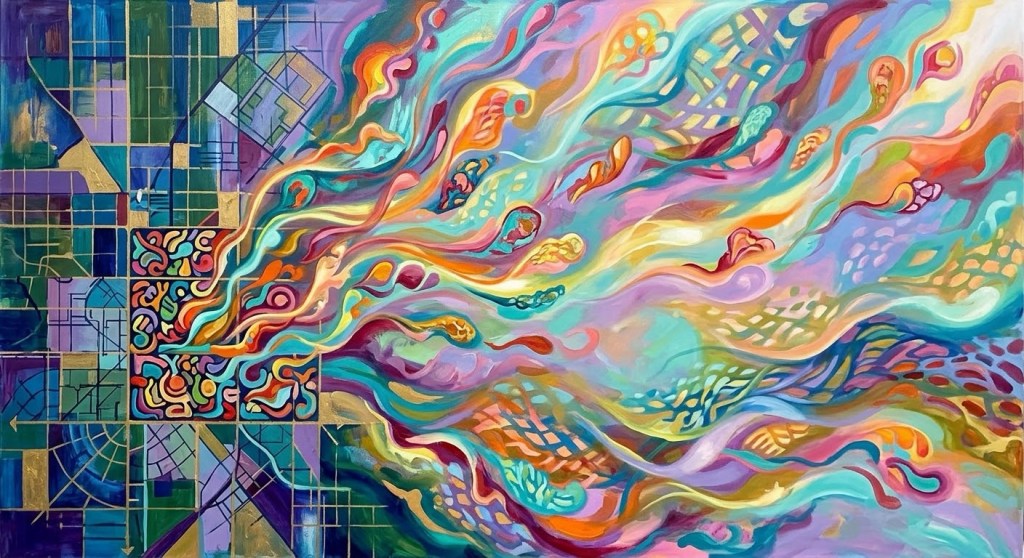
When History Escapes
Some historical events never stay where they happened.
They escape.
Not physically.
Conceptually.
Consider the sheet of paper Neville Chamberlain held above his head after returning from Munich in 1938.
At first, it belonged to a specific moment.
A treaty.
A negotiation.
A crowd.
A speech.
Then history changed.
The same paper acquired a different meaning. It became associated with the failure of appeasement.
But something else happened afterward.
The event itself escaped.
Today, people invoke “Munich” even when they are not talking about 1938.
They may be discussing Russia.
China.
Iran.
A business negotiation.
A labor dispute.
A difficult conversation between neighbors.
The geography has disappeared.
The event has become a pattern.
History has been compressed into a concept.
That is fascinating.
Some events remain historical.
Others become vocabulary.
Waterloo.
Pearl Harbor.
Watergate.
The Trojan Horse.
Crossing the Rubicon.
These expressions no longer require their original setting to function. They have escaped their coordinates and entered ordinary language.
They are no longer only things that happened.
They have become ways of thinking.
This also changes how we understand evidence.
The paper Chamberlain waved is no longer only evidence of the Munich Agreement.
It has become evidence within a larger argument about concession, aggression, and misjudgment.
The object stayed.
The event expanded.
Perhaps this is what happens whenever history becomes useful.
It stops belonging only to itself.
It begins helping us understand something else.
That is both powerful and dangerous.
Powerful because one event can illuminate another.
Dangerous because every analogy leaves something behind.
No modern conflict is literally Munich.
No political scandal is literally Watergate.
No personal decision is literally crossing the Rubicon.
The event survives by becoming portable.
But portability always simplifies.
Perhaps the task is not to stop using history this way.
It is to remember the difference between the event and the pattern it became.
History is full of moments.
A few of them escape.
And once they do, they no longer belong only to historians.
They become part of the language through which we understand the present.
WE&P by: EZorrillaMc&Co.
 Travel in Life