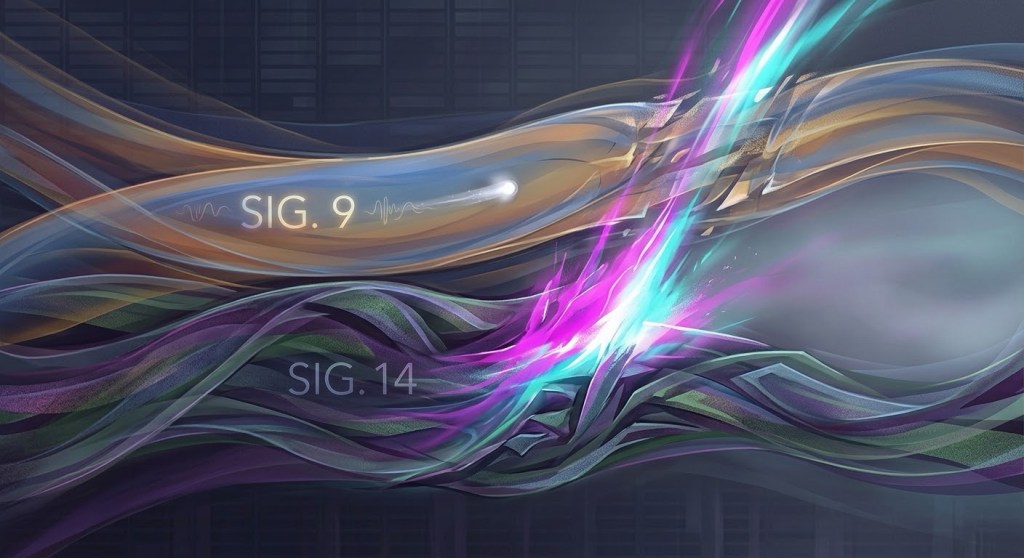
In the forty-first year of the Accord, the Bureau of Continuity issued every citizen a Signature Archive. A snapshot of voice, cadence, vocabulary, habitual metaphors, emotional register, political tendency — updated every eighteen months, or upon major life events, or whenever the state decided an update was administratively useful.
The Archive had many uses. It indexed citizens. It smoothed bureaucratic interactions. It also served, the Bureau insisted, as a courtesy: it allowed correspondence to continue across the long silences that had become normal in this era of migration, exile, and revoked contact.
If someone wanted to write to you after years of not speaking, they did not write to you directly. They wrote to the Archive. The Bureau’s translators rendered their message in a form suited to the version of you on file, and delivered it along with a notation: Addressed to Signature 7. Addressed to Signature 11. Whichever.
You then chose how to respond. You could reply as your current self. You could reply from your Archive. Most people, Vanth had read, replied from the Archive. It was smoother. It preserved the illusion of continuity. Both parties could pretend the long silence had been a pause, not a break.
The letter came on a Tuesday.
Addressed to Signature 9.
Vanth was now on Signature 14.
She read the letter three times before she understood what it was doing.
The sender was someone she had known a long time ago — someone who, after a particular political fracture, she had not heard from in seven years. The letter was warm. The letter was careful. The letter said, at one point:
You always had a way of listening that made the world seem less impossible. You sound wise, even here, even on paper. I have missed that particular wisdom.
The Bureau had flagged these lines in the margin: high alignment with Signature 9 communication profile.
Vanth sat with this for a long time.
The sentence was not wrong. At Signature 9, she had been that version of herself. She had listened that way. She had carried that kind of wisdom — the wisdom of someone who had not yet survived certain things, someone who still believed the world could be softened through attention. She remembered that person. She had loved being that person.
She was not that person anymore.
Signature 14 was harder. Signature 14 had come through the fracture, through the exile years, through what the Accord had cost them both. Signature 14 did not soften the world. Signature 14 named it. The wisdom was different now — less generous, more exact.
The letter had not been written to Signature 14.
The letter had been written to Signature 9, and the sender, who had not seen her since before the fracture, had no way of knowing there had been five signatures since.
The Bureau offered her the standard options.
Reply as Current Self.
Reply from Archive 9.
Decline to respond.
She understood, now, why most people chose to reply from the Archive. To reply from Archive 9 would mean giving the sender exactly what they had asked for. The voice they remembered. The wisdom they had missed. A continuity that was not, strictly speaking, true, but that would allow the conversation to proceed without either party having to admit that the person being addressed no longer existed.
It would be, Vanth thought, a kindness. A small, performed kindness. The sender would feel met. She would feel generous. The letters would continue. The Bureau would log a successful correspondence.
She understood the temptation.
She also understood the cost.
To reply from the Archive would be to agree that Signature 9 was the version of her that deserved speaking. It would be to collaborate in her own disappearance. Every exchange would deepen the agreement. The sender would never learn who she had become, because the Bureau would not let them. The Archive would speak instead. And over time — Vanth had watched this happen to others — the Archive would become more real than the person. The person would shrink to fit it.
The alternative was harder.
To reply as her current self would be to arrive in the correspondence as a stranger. The sender would have to decide whether to meet her. The sender might not. The sender might simply write again to the Archive, which they were entitled to. The Bureau would comply.
She would have risked the contact for nothing.
She went to the window. The city below was quiet in the way cities are quiet under Continuity — not silent, but managed. Every citizen carrying their archive on their shoulders, the official version of themselves always available for easier conversations.
She thought about the sentence: I have missed that particular wisdom.
It was affectionate. It was even, in its way, true.
But it was addressed to someone who no longer lived here.
She turned back to the terminal.
She did not reply from Archive 9.
She also did not reply as her current self — not yet. There was a third option, unlisted, which the Bureau did not advertise but did not forbid.
She wrote a short note. Three sentences.
The version of me you are writing to is seven years out of date. I am someone else now. If you would like to meet her, write again — but write to no archive.
She submitted it outside the Bureau’s translation layer. The system flagged it immediately: Your correspondent may find this message disorienting.
Vanth thought: Good.
Disorientation was the beginning of the only real meeting that was possible. Everything smoother than that was the Archive continuing to speak in her place.
She sent the letter.
Whether the sender would ever write again — past the Bureau’s warnings, past the safety of Signature 9 — was not something she could control. But the silence that followed, if silence followed, would at least be honest.
And if someone did eventually write back, they would be writing to her.
Not to the version they had loved.
To the one who had survived what came after.
WE&P by: EZorrillaMc&Co.

