The transport docking was smooth, a stark contrast to the jarring combat landings she was used to. There were no klaxons, no emergency venting procedures. Just a soft chime and the hiss of a standard gangway extending.
Elara stepped off the ship and into the terminal of her home station. The air smelled different here—less ozone and scrubbed recycled oxygen, more humidity and the faint, dusty smell of dried vegetation from the station’s arboretums.
This was reentry.
It wasn’t a triumphant return. It wasn’t a crash landing. It felt, unnervingly, like slipping silently into a room where everyone else was already mid-conversation.
The world hadn’t changed. The ad-holo-projectors flickered with the same manic energy selling nutrient paste and off-world vacations. The crowds moved with the same hurried indifference. But Elara was a ghost in the machine. Without her flight suit, without the visible weight of her gear, she felt transparent. People’s eyes slid right off her cotton jacket.
She had expected relief. Instead, she felt a profound, hollow vertigo.
She took the grav-tram to her sector. Her muscle memory tried to brace for high-G turns that never came. When she reached her apartment door, her hand automatically went to her belt for a security fob that wasn’t there. She had to dig in her pocket for the flimsy plastic keycard.
Inside, her apartment was a museum of a person she no longer recognized.
On the workbench sat a half-dismantled drone engine, its components laid out in surgical order. On the wall were commendations for bravery under fire, framed behind glass. In the closet hung spare uniforms, stiff with starch, waiting for a body rigid enough to fill them.
Everything in the room demanded action. The engine said, “Finish me.” The uniforms said, “Prepare.” The silence said, “Do something useful.”
Elara stood in the center of the room, her grav-crate sitting awkwardly on the rug. She was a blank slate surrounded by a completed mural. The friction between her inner emptiness and the dense history of the room was physically painful.
The temptation to put on an old uniform, just to stop feeling so undefined, was ferocious. It would be so easy to slip back into the role of the competent, hardened veteran. The neighbors expected it. The station expected it. It was a pre-fabricated identity waiting for her to step into it, like a warm coat on a cold day.
No, she thought, flexing those empty hands again. That coat doesn’t fit anymore. It chokes me.
Finding a new identity, she realized, wasn’t about going out and hunting for one. It wasn’t a mission objective to be acquired. It was about enduring the discomfort of the void long enough for something true to grow in its place.
The first few days were an exercise in agonizing restraint.
Her neighbor, Jax, saw her in the hallway. “Elara! You’re back. Thank the stars. My atmospheric recycler is making that grinding noise again. Can you take a look? You’ve got that magic touch with hydraulics.”
The old Elara would have had the panel off in thirty seconds. Her worth was measured in problems solved.
The new Elara stood there, hands light and empty at her sides. The silence stretched. Jax looked confused, his eyes scanning her plain clothes, looking for the utility belt that wasn’t there.
“I can’t, Jax,” she said softly.
“Can’t? You mean you don’t have your tools on you? I have a wrench set.”
“No,” she said, the word feeling strange on her tongue. It wasn’t a tactical denial; it was a statement of being. “I mean, I don’t do that anymore.”
She left him bewildered in the hallway. It felt awful. It felt like failure. But it also felt true.
She spent hours sitting in her apartment, resisting the urge to organize, to clean, to optimize. She let the dust settle. She let the silence be heavy without trying to lift it.
The new identity didn’t arrive with a fanfare. It began in the margins.
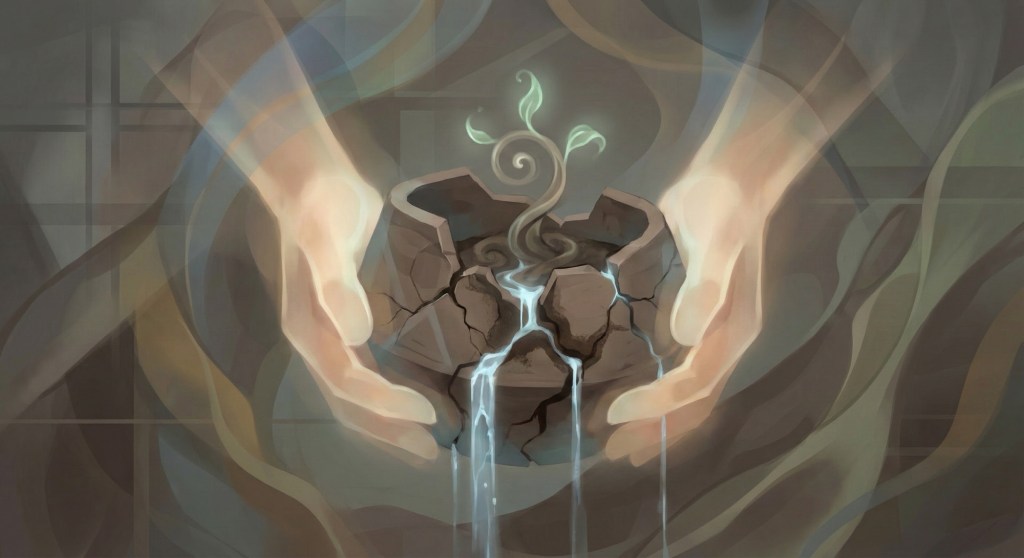
It started on the fifth day. She was staring out her viewport at the station’s hydroponic domes. She noticed, really noticed for the first time, a small, neglected terrarium in the corner of her own living room—a parting gift from a civvie friend years ago that she’d deemed “impractical clutter” and ignored.
The soil was dry, cracked into hard plates. The small leafy plant inside was wilted, grayish-brown, clinging to life.
Her hands, tired of hanging uselessly, reached out. Not to fix a machine, but to touch the dry earth.
She brought the terrarium to the sink. She didn’t analyze the water flow rate. She just let the water trickle onto the soil, watching the dry cracks darken and swell as they drank it in. She sat there for an hour, just watching the water absorb.
It was slow. It was inefficient. It served no tactical purpose.
But as she touched the fragile, papery leaves, her hands didn’t feel useless. They felt gentle.
The next day, she went to the station market. She walked past the hardware stalls where the power cells beckoned. She stopped at a stall selling raw pigments and textured papers. She didn’t know why. She had never drawn anything but schematics.
She bought a charcoal stick and a pad of rough paper.
Back in her apartment, she sat in front of the half-dismantled engine. She didn’t pick up a wrench. She picked up the charcoal.
Her first attempts were rigid, full of hard lines and exact measurements, just like a blueprint. She was trying to capture the engine’s function.
But as she kept drawing, her hand grew tired of the precision. The charcoal smudged. She let it smudge. She began to draw not the mechanics of the engine, but the shadows it cast on the table. She drew the heavy stillness of it.
When she looked at her hands afterward, they weren’t covered in grease and coolant. They were dusted with soft black powder.
She wasn’t “Elara the Fixer” or “Elara the Soldier.” She was just Elara, a woman sitting quietly in a room, watching a plant slowly turn green again, her fingertips stained with charcoal.
She was still a blank slate, but she had stopped trying to armor herself against the world. She was finally, terrified and willing, beginning to let the world write something new upon her.
WE&P by: EZorrillaMc&Co
 Travel in Life