

40 minute Sheffield City Tour

Early Days & Brand Launch (1990s-2004)
- Origins: The TPE concept emerged from British Rail’s Regional Railways, connecting cities across Northern England.
- Privatisation: After rail privatization, the network was split; Ariva Trains Northern and First North Western ran the services.
- Franchise Formation (2004): The Strategic Rail Authority separated fast (TPE) and slow (Northern) services, awarding the first TPE franchise to FirstGroup and Keolis.
FirstGroup Era (2004-2023)
- Expansion: The franchise grew, adding key routes to Edinburgh and Glasgow from Manchester in 2007.
- New Branding (2016): FirstGroup won a new franchise, rebranding from First TransPennine Express to just TransPennine Express (TPE), introducing new ‘Nova‘ trains (Nova 1, 2, 3).
- Routes: TPE operated three main routes: North (Liverpool/Manchester to Hull/Scarborough/Edinburgh), Scottish (Manchester/Liverpool to Scotland), and South (Manchester to Cleethorpes/Sheffield).
Government Takeover (2023-Present)
- Contract End: Due to poor performance, the government did not renew FirstGroup’s contract.
- Operator of Last Resort: On May 28, 2023, the service transitioned to TransPennine Trains, a government-owned company, which continues to run services as TPE.
Key Routes Today
- TPE still links major hubs like Manchester, Liverpool, Leeds, York, Hull, Edinburgh, and Glasgow across Northern England and Scotland.
TransPennine Express (TPE) uses diesel trains, but is transitioning to greener options, with fleets like the Class 802 “Bi-Mode” (electric/diesel) and previously the diesel-only Class 185s, while planning to phase out pure diesel trains for electrification progress. TPE has aimed to reduce pollution and remove diesel trains by using new tech and capitalizing on the TransPennine Route Upgrade(TRU) for electric power, though diesel is still needed on non-electrified sections.
Key TPE Diesel/Bi-Mode Fleets:
- Class 802 Nova 1: These are “bi-mode” trains, meaning they can run on overhead electric power where available and switch to diesel engines for non-electrified routes, offering greener travel.
- Class 185 Desiro: These are diesel multiple units (DMUs) used on specific routes, like Manchester to Sheffield/Hull, and are being phased out as part of decarbonization efforts.
- Class 68 Locomotives: Used with Mark 5A carriages (Nova 3), these were powerful diesel locomotives that TPE scheduled for withdrawal due to technical issues and noise.
The Shift to Greener Trains:
- TPE is working with the TransPennine Route Upgrade (TRU) to electrify more lines, allowing trains like the Class 802 to use electric power, reducing diesel dependency.
- The goal is to eventually remove all diesel trains from the network, introducing newer electric and bi-mode technologies to support decarbonization.
Update on Siding Delay.
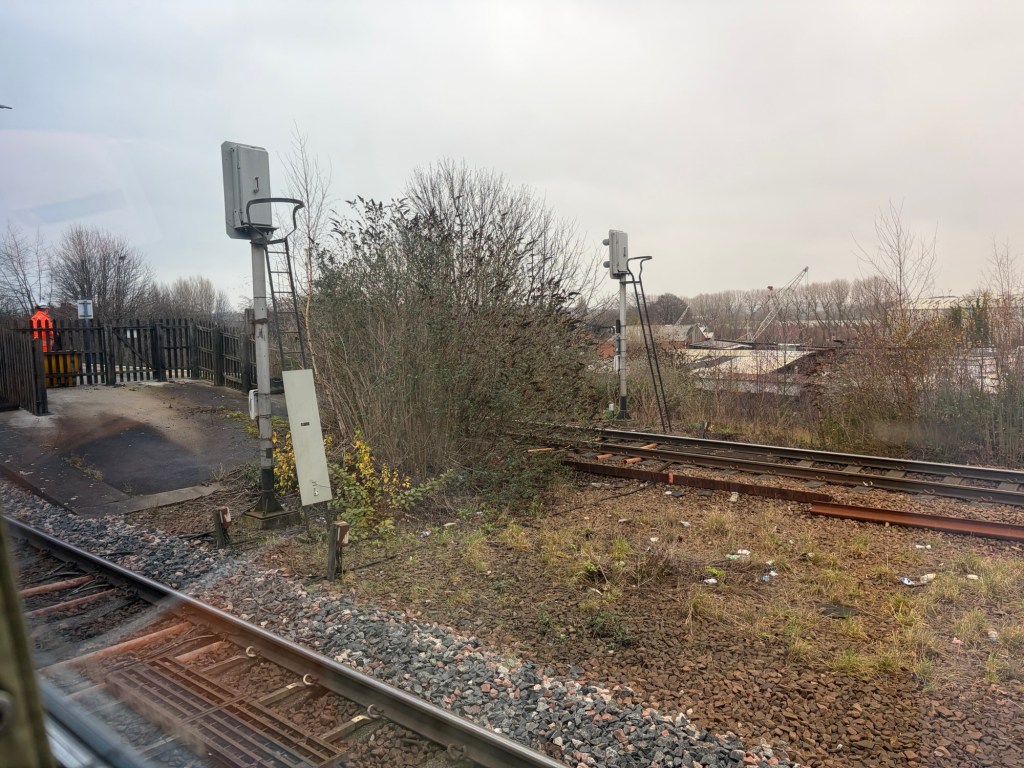
Based on your location and the specific 34-minute delay shown on your CrossCountry app, here is the situation regarding the signal issues on the Sheffield–York line for today, December 23, 2025:
1. The Immediate Cause: “Moorthorpe” & Sheffield Signaling Faults
There are currently active reports of a signaling system fault near Sheffield and a safety inspection of the track in the Moorthorpe area.
• Why this affects you: Your train (Sheffield to York) passes directly through the Moorthorpe junction to get to Wakefield Westgate.
• The “34-Minute” Delay: Reports indicate that trains are being cautioned (forced to drive slowly) through this section, resulting in “knock-on” delays of exactly 25–40 minutes. Your 34-minute delay fits this pattern perfectly.
2. The Chronic Issue: Transpennine Route Upgrade (TRU)
The “signal issues” you are hearing about aren’t just a one-off glitch; they are part of the massive Transpennine Route Upgrade taking place throughout 2025.
• What is happening: Network Rail is currently replacing the entire signaling system between Leeds, York, and Church Fenton (the section your train enters after Leeds).
• The Consequence: Because they are installing 54 new digital signals and electrifying the line, the old copper-wire signals often fail or “track circuit blocks” occur where the new and old systems meet.
3. The “Bottleneck” Factor
You are currently traveling on one of the most congested rail corridors in the UK.
• Leeds Throat: As you approach Leeds (after Wakefield), your CrossCountry train has to squeeze through a notorious bottleneck where high-speed LNER trains and local Northern stoppers all fight for the same green lights.
• The “Ripple Effect”: A single signal failure at Moorthorpe (where you are now) causes a traffic jam all the way up to York, because trains cannot enter the next “block” until the one ahead has cleared it.
Summary for the trip:
The delay is likely caused by the Moorthorpe/Sheffield signal fault. You will likely crawl slowly until you clear Wakefield, but once you pass Leeds, the run to York should be smoother unless the TRU works near Church Fenton cause further holding.
Based on the specific alerts for today, Tuesday, December 23, 2025, you should expect delays on your return trip. The issue is likely to persist rather than just being a temporary glitch.
Here is the situation impacting the Sheffield–York line today:
- Active Incident: Signaling Fault at Sheffield
There is a confirmed fault with the signaling system near Sheffield causing delays of roughly 20 minutes between York and Sheffield.
- Why it matters for your return: Even if the technicians fix the physical signal in the next hour, the disruption has already displaced train crews and rolling stock. On a congested day like today (December 23rd), recovering the timetable is extremely difficult.
- The “Crew Availability” Factor
CrossCountry has issued a specific warning for today, December 23, regarding “constraints on train crew availability”.
- The Risk: When a signal failure delays a train, the crew often misses their break or their connection to the next train. Because there are no “spare” crews today, this can lead to sudden, last-minute cancellations of return services.
- Planned Works (Compounding the Issue)
While the signal fault is accidental, there are also planned Transpennine Route Upgrade (TRU) works taking place between Dewsbury and Huddersfield today.
- Impact: This engineering work puts extra pressure on the remaining open lines. Any small delay (like the Sheffield signal fault) ripples out much faster because there are fewer alternative tracks available for trains to bypass the problem.
Recommendation for Your Return - Check “Live” 20 Minutes Before: Do not rely on the timetable. Check the app 20 minutes before you head to York station.
- Watch for “Cancellations”: Be more worried about a full cancellation (due to crew timing out) than a 15-minute delay.
- Alternative: If your ticket allows it (e.g., “Any Permitted”), keep an eye on LNER or TransPennine Express services from York to Sheffield/Doncaster, as they might recover faster than CrossCountry.
WE&P by: EZorrillaMc&Co
 Travel in Life
You must be logged in to post a comment.