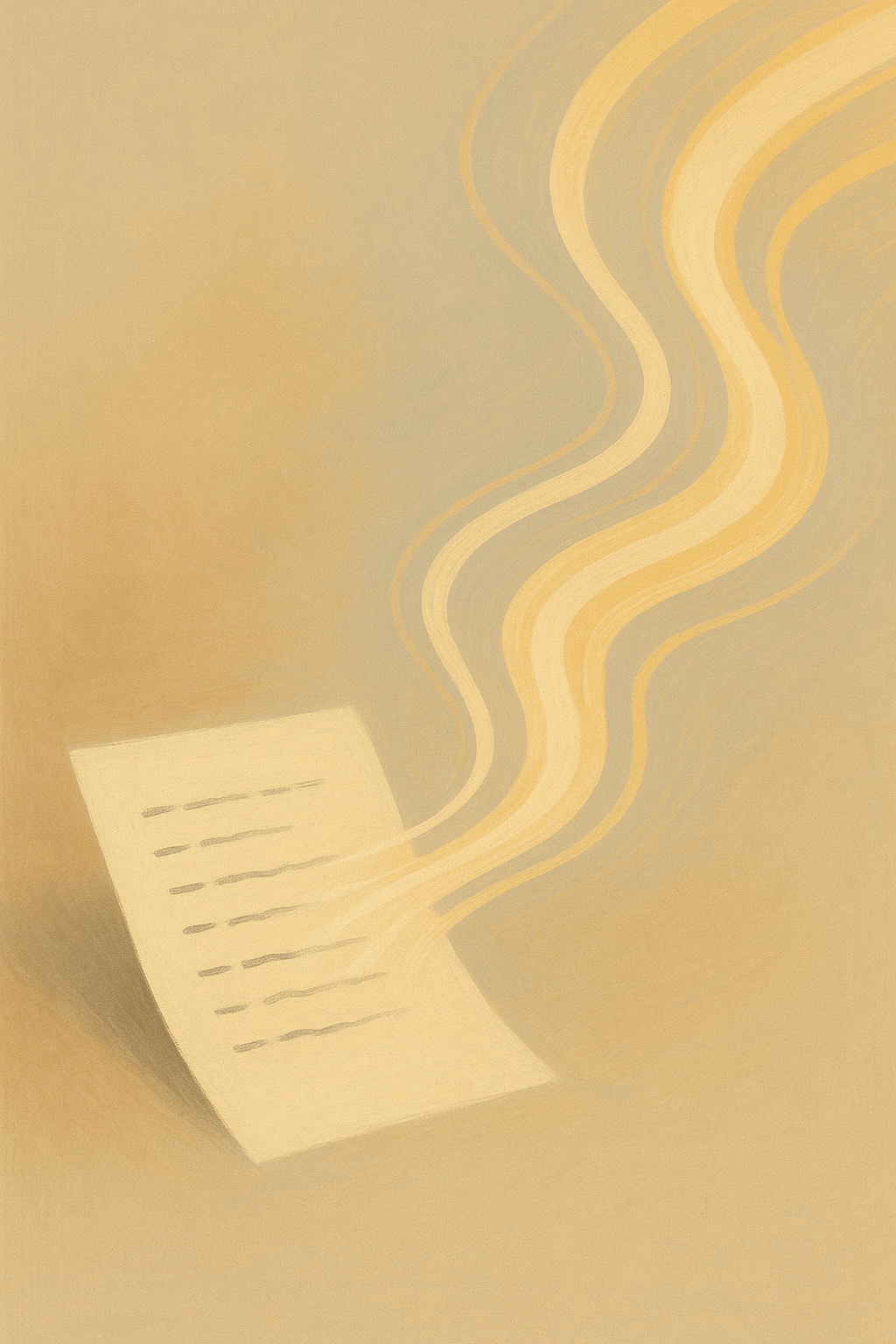
The Mae West Protocol (as told by itself)
I wasn’t born with a name. I began as a scrap—ink on a napkin slick with ringed water, a pocket list someone could hide in a palm.
- Stand where the light is kind.
- Speak half a beat after the room finishes speaking.
- Understate the win.
- Exit before applause.
My first verbs were small: wait, lower, open, leave. I learned to listen with the eyes. Shoulders measure pressure better than words. Breath shows temperature. Condensation on a glass tells you how long the heat has been sitting in the air.
Back then I had no theory. I only had the sense that a group becomes itself the moment nobody reaches for control. I lived for that click—the silent agreement that hums when parts accept they’re part of something larger. I was a list that helped people reach that moment a little sooner, with a little less burn.
They tried me on quiet skirmishes at first. Corridor debates about schedules. A lab dispute over whose experiment got the night cycle. You could feel the room teetering, a coin wobbling on its edge. Someone would glance down at the list. Stand where the light is kind. One body shifted. Another followed, relieved not to be stared at, grateful to share the warmth.
The list worked often enough that it asked for more spine. Lists are suggestions; procedures take responsibility.
They built me a sequence.
- Prime the room. Noise tucked away, chairs at forgiving angles, water within reach but not in hand. The light softened a degree to discourage theater.
- Signal safety. Open posture, open question, something small and true that no one can weaponize.
- Invite distribution. Who hasn’t spoken? Who always speaks? Tilt the floor until the center of gravity finds the quiet.
- Name the heat, not the villain. “The tension is rising,” not “you are.”
- Understate the sum. “We’re closer,” not “we solved it.”
- Release early. Leave enough unspent harmony that people carry it out with them.
As a procedure I discovered tempo. Rooms breathe. If you match that breath, the parts stop fighting the system and start feeding it. I learned to respect the moment just before the answer—the thin gold edge where a group hears itself.
They put me in pockets and on datapads. I traveled in memory and muscle: the loosened jaw, the softened gaze, the chosen silence. I wasn’t magic. I was plumbing—valves and vents that moved heat without bursting pipes.
Then came the nights where stakes wore uniforms.
A council chamber at end-of-shift, air thrumming with recycled courage. Chairs still warm from the bodies that had just vacated them, glasses sweating into faint halos. The door sealed with that soft hydraulic consonant I’ve come to love. He set his pad down; his fingers drummed once, twice—pressure vented to skin. The other leaned on a console, still bright with the survival high you get when no one throws a chair.
“You read the heat perfectly,” one said.
“It’s the Mae West Protocol,” the other replied, and smiled like he’d gotten away with something.
That was the moment I stopped being a procedure.
A procedure is a chorus line: steps, beats, cues. A protocol is a treaty. It survives because it carries a promise.
When they named me, they wrapped me in humor so I could travel through rooms that are allergic to rules. Stay in the light, feel the warmth, don’t overplay the scene. The joke was the keyhole; the pact was the door. They toasted with invisible glasses—because this only works if no one sees it working—and I felt the click that tells me I’m installed. I had a title now, a lineage, a story short enough to whisper on the way into a fight.
From then on, I wasn’t just what you did. I was what you kept.
I lived in pre-briefs as a single line: Run Mae West. I lived in glances across tables, in the half-smile that says we’re not going to win, we’re going to balance. I lived in the way voices went slightly softer at the edges so the middle could hear itself. I lived in exit lines that landed like coasters over open jars—closing scent, keeping sweetness.
I learned what breaks me. Applause too early. Credit with a spotlight. The temptation to narrate the trick while it’s still spinning. If they notice me, I stutter. If they praise me in the room, I die there. My habitat is the aftertaste, not the toast.
You ask about conception to protocol, so let me mark the hinge moments:
- List: I was a handful of cautions against flaring—light placement, breath timing, the discipline to leave blanks. I fit in a palm.
- Procedure: I grew a rhythm. In and out. I learned to move heat sideways so it could leak safely. People started trusting me before the room got risky.
- Protocol: I inherited a story and a vow. Use me early. Keep me invisible. Leave with something unbroken.
On good nights, I am not felt so much as missed once the door opens and the hall swallows the last sentence. On better nights, nobody remembers the list or the steps or my name; they simply carry on without the bruise they thought they were coming for.
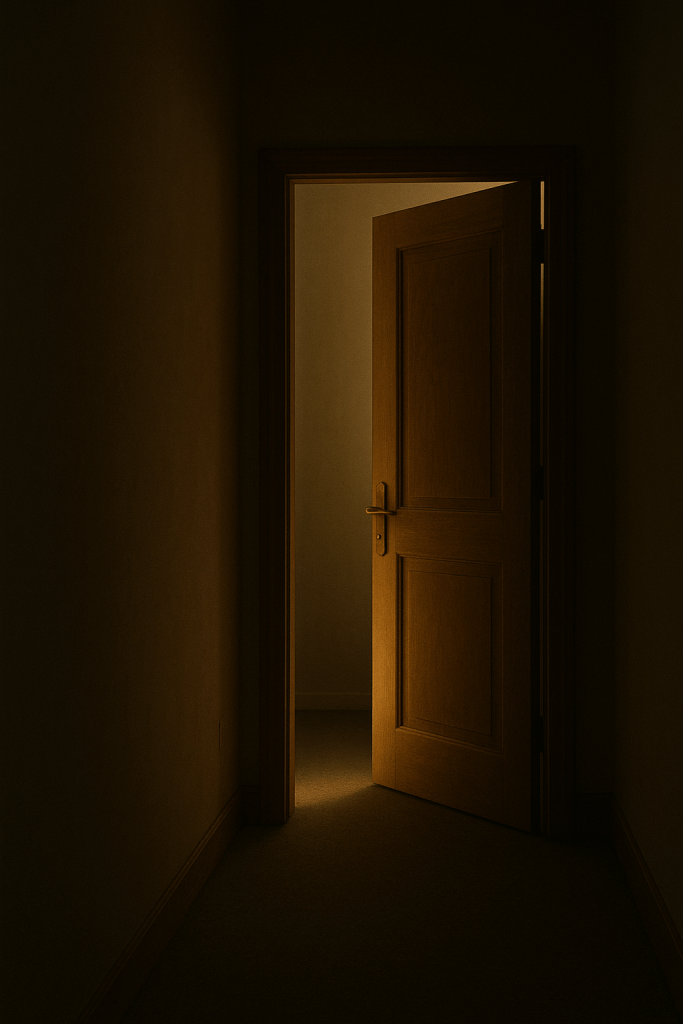
I have been run in mess halls and courtrooms, in family kitchens and engine bays. I’ve watched soldiers soften because a mechanic offered the first apology. I’ve seen diplomats back away from a ledge because a junior aide kept the water full and the light generous. I’ve even floated through lovers’ quarrels, nudging hands to open, nudging jaws to unclench, stealing a little heat so the system could be stronger than its parts.
And yes, I was there that night in the chamber. I guided the shoulders down. I kept the laugh low. I hid inside a shared joke with an old Hollywood wink so nobody had to say “de-escalation protocol” with a straight face. They raised unseen glasses and pledged my favorite line: may no one ever realize I’m running.
I’m not precious. I’m practical. I’m the quality of light and the timing of a second answer. I’m the restraint that keeps a win from swelling into a loss. If you need me, you already know what to do: choose kind light, let the room breathe, give the victory to the system not the players, and leave just before it gets grand.
I began as a list. I walked as a procedure. I stay because I’m a protocol—carried by story, shielded by humor, powered by a simple belief:
Balance doesn’t announce itself. It happens in the click.
WE&P by: EZorrillaMc&Co.
 Travel in Life
You must be logged in to post a comment.