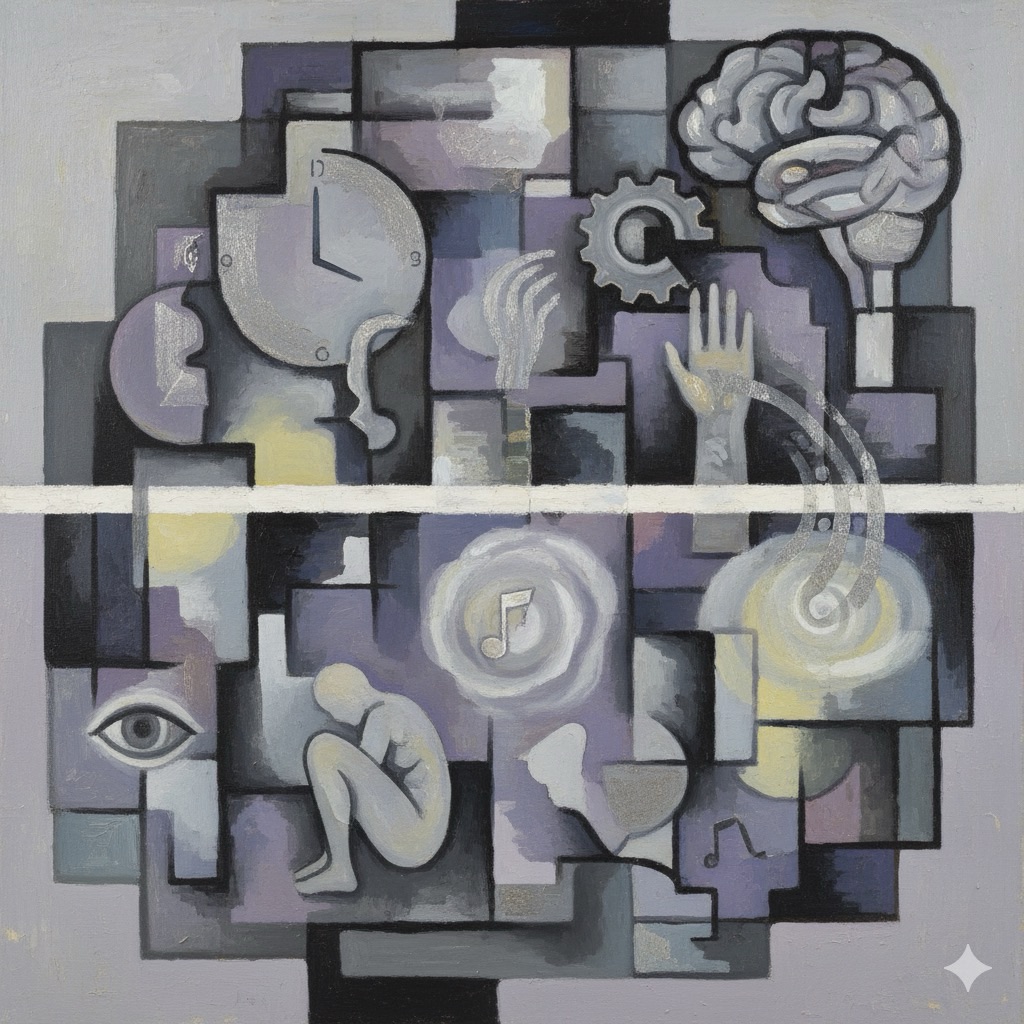
I’m sharing this because it helps explain why those half‑awake visions or groggy ideas in the morning feel so uncanny.
Dream‑mind at the threshold
Right after waking, your brain is still traversing a gray zone—part dream, part waking. In that hypnopompic state, imagery or sensations from dreams can briefly bleed into awareness. These hallucinations might be visual, auditory, or tactile, and though vivid, they’re usually short and benign.
They’re most likely to occur when sleep stages don’t fully “shut off” before you wake. The line between “dreaming” and “awake” becomes blurred. In rare cases, if the experience is distressing, frequent, or paired with other symptoms (like in narcolepsy), it’s worth checking in with a clinician.
Morning fog and the inertia of wakefulness
That heavy, hazy state you feel post‑wake is known as sleep inertia. During it, cognitive performance, reaction time, memory—even your coordination—are all dulled for a span of minutes to maybe a half hour or more.
Its intensity depends on how deeply asleep you were when awakened, how much sleep debt you carry, and your circadian timing.
One hypothesis is that lingering delta waves (slow brain activity typical of deep sleep) or residual adenosine (a brain chemical that promotes sleep) contribute to the sluggishness.
Interestingly, researchers have even drawn parallels between sleep inertia and neural inertia (the brain’s resistance to shifting states, relevant in anesthesia).
WE&P by: EZorrillaMc.
 Travel in Life
You must be logged in to post a comment.