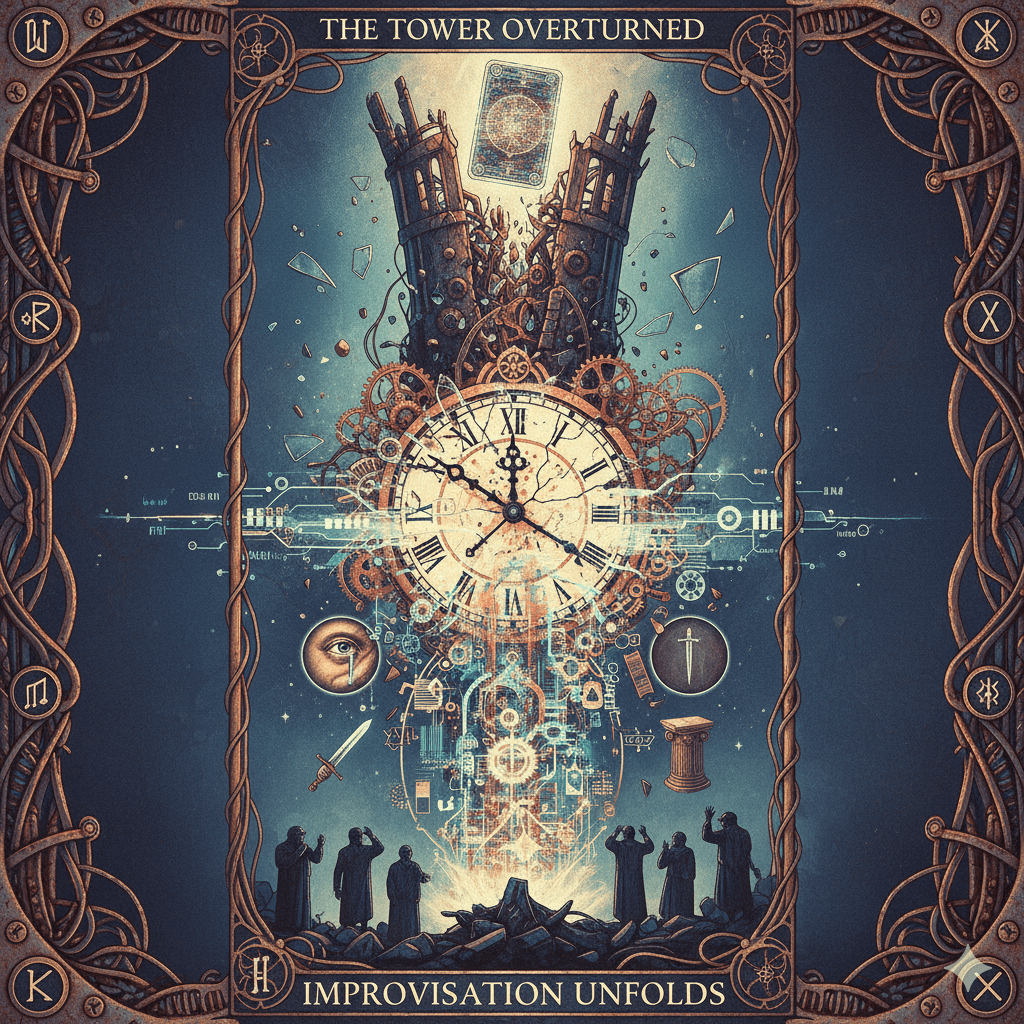
Episode 1 – The Deck Before the Shuffle
Theme: the seduction of order.
We open with the deck-of-cards metaphor—the sense that life, like a new deck, once followed rules and sequences. Pattern comforts; certainty is a kind of faith. Characters (or the narrator) find safety in predictability—rituals, dogmas, systems that claim to explain why things happen.
Episode 2 – The First Shuffle
Theme: disruption enters.
A card turns wrong. An event—a loss, a technological shift, a moral shock—breaks the pattern. The moment exposes how much of the “order” was belief, not fact. The world starts feeling less like a plan, more like improvisation.
Episode 3 – The Illusion of the Dealer
Theme: search for new authority.
People still want someone to tell them the meaning behind each draw: priests, scientists, influencers. Each promises coherence but can’t deliver it. The arc here explores the human need to assign purpose even when randomness is the real rule.
Episode 4 – Learning to Read the Shuffle
Theme: adaptation.
Instead of resisting chance, the narrator begins to see beauty in unpredictability. Patterns still exist—mechanical, cosmic—but they don’t guarantee emotional order. This episode becomes about learning to live as if meaning arises through interpretation, not revelation.
Episode 5 – The Honest Pattern
Theme: reconciliation.
The story closes with acceptance: the universe may move by law, yet the heart experiences it as chance. Faith shifts from believing in fixed design to trusting one’s capacity to find rhythm inside the shuffle. The deck remains chaotic, but play continues—freely, attentively.
Learning Path:
comfort in order → shock of disorder → craving for new certainty → curiosity about chaos → peace with duality.
“Technopoly: The Surrender of Culture to Technology” by Neil Postman.
WE&P by: EZorrillaMc.
 Travel in Life