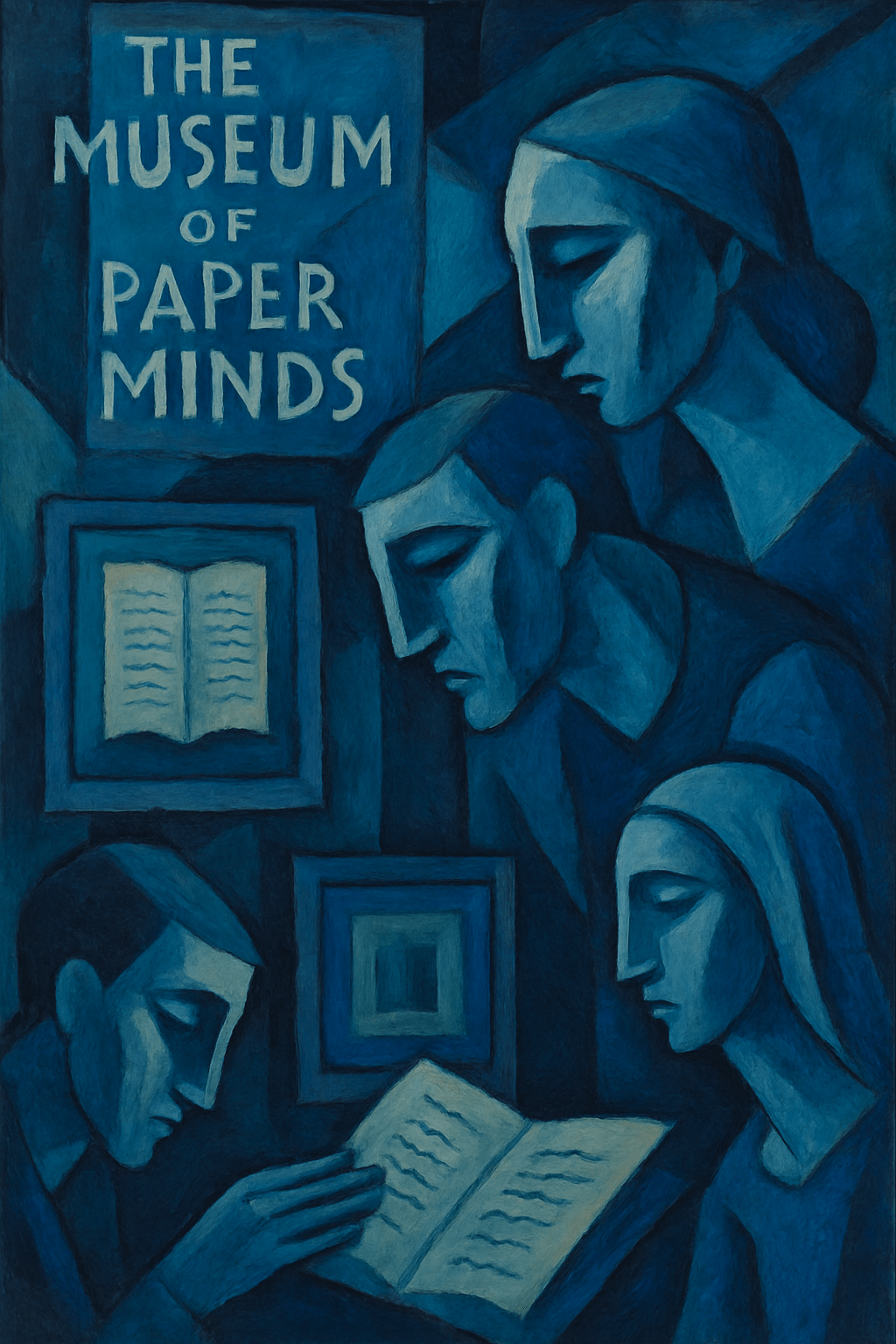
A Journey Through the History of Thinking on Paper
Room One: Origins

In the first chamber, light falls dimly across clay tablets and wax boards, across vellum scarred with the ghosts of scraped-away words. Here memory first hardens into matter, fragile yet weighty, never fully able to forget. Each surface bears the trace of an ancient hand, the earliest attempt to pin thought to the world.
Room Two: The Ledger
Step into Florence, where commerce and paper met. Double-entry columns, clean and stern, balance debit against credit, promise against trust. These ledgers were more than records—they were engines of order, binding lives together in ink. Within their margins the architecture of modern exchange took shape.
Room Three: The Miscellanies
Now the room grows crowded, shelves sagging with zibaldoni and commonplace books. A recipe beside a prayer, a lullaby beside a list of debts. These volumes are mosaics of life, unruled and untidy, stitched together by ordinary hands. They remind us that memory, too, is fragmentary—a patchwork of voices carried across generations.
Room Four: Logs and Journeys
The air sharpens with salt and wind. Ship logs lie open, their ink blurred by spray. Explorers’ journals, stained and frayed, share space with Darwin’s field books, where sketches of birds and beetles huddle beside cramped notes. These are notebooks that traveled, companions through storm and jungle, fragile pages that reshaped the world.

Room Five: Artists’ Corners
The light here softens, like daylight through a studio window. On one wall, Leonardo’s restless sketches scatter across the page, ideas leaping faster than the ink. Nearby, Agatha Christie’s notebooks sprawl in restless outlines, half-plots colliding and reforming. This is not a place of polish but of possibility—a garden where imagination is allowed to sprawl, unfinished, alive.
Room Six: Power and Control
The atmosphere changes. Under harsh white lamps, police logs and court notebooks lie stiff as verdicts. Medical diaries whisper of days a patient never lived awake. These pages carry authority, evidence, accusation. Yet here too is tenderness: a life stitched back together from borrowed words, a memory rebuilt from another’s hand.
Room Seven: Private Chambers
The light dims again, now warm, intimate. Small desks wait with diaries locked and journals worn smooth by use. Each page hums with the quiet scaffolding of ordinary life—bread baked, tears dried, grief confessed, love remembered. In these lines the intimate and the infinite meet, for what is more vast than the texture of a single day, faithfully written down?
Room Eight: Reflections

The last room is stark, pared back. A notebook lies open beside a glowing tablet, pen and pixel side by side. The air feels unsettled, suspended between speeds—the slow scratch of ink, the staccato click of keys. Here the museum asks a final question: what pace of thought will we choose to carry forward?
Closing Invitation
Before you depart, take a card, a blank fragment of paper. Write one word you wish to preserve—just one—and add it to the living wall. In doing so, you join centuries of others who trusted ink to outlast the voice. The story of paper minds continues, line by line, hand by hand.
The Notebook: A History of Thinking on Paper by: Roland Allen
WE&P by: EZorrillaMc.
 Travel in Life
You must be logged in to post a comment.